





 Japanese Language Navigation
Teaching and Learning Resources
Wherever possible we have tried to credit the creators of all resources featured here. You can download them and use them instantly with your class, or adjust them to your needs.
The Japan Foundation welcomes your feedback on the resources featured on the website. Please email your comments to info.language@jpf.go.jp. Please note we cannot guarantee the quality of resources made by other creators.
 Resources created by the Japan Foundation
 Resources funded by the Japan Foundation's Japanese Language Local Project Support Programme or supported by the Japan Foundation “Sakura Network” programme.
Featured Japan Foundation Websites

The Japan Foundation Japanese-Language Institute, Kansai has released the Japanese language learning platform, JF Japanese e-Learning Minato in order to provide an opportunity to study Japanese for all those people in the world who may wish to begin learning, but cannot attend an actual Japanese language school.
The main course of Minato is the Marugoto Japanese Online Course, which we recommend for those who wish to comprehensively learn about the Japanese language and culture. With this course you can have an integrated learning experience by using interactive e-learning materials to study the language skills needed for communication (listening, speaking, reading, and writing).
A website where you can enjoy studying Japanese while getting information on various topics. It is aimed for Japanese language learners with a proficiency level of A1 or A2 (Starter to Elementary) in the JF Standard for Japanese-Language Education. Users can engage with various aspects about Japan and the Japanese language through articles and videos.

◆◇The website 'MARUGOTO Plus (Starter A1)' has been updated!◇◆
The website 'MARUGOTO Plus (Starter A1)', which allows you to have fun learning Japanese language and culture, has been updated!
MARUGOTO+ (MARUGOTO Plus) is a website where users can learn about Japanese language and culture alongside the contents of "Marugoto: Japanese language and culture", a coursebook which uses the JF Standard as a basis. Users can practice "real-life" Japanese while watching videos that help deepen understanding of actual everyday situations, in order to achieve various 'Can-do' goals.

A growing number of young people are studying Japanese language because they are attracted to Japan's "cool" culture. For these young people, the Japan Foundation has developed the series "Erin's Challenge! I Can Speak Japanese." The programme features mini-dramas by up-and-coming actors together with clear and fun explanation by animated characters. In addition to language study, the programme is designed to help learners develop an attitude conducive to cultural understanding.
At the Japan Foundation we have made an app with a variety of features, so that these young people can study Japanese and test their ability more easily and in a more engaging way. The app can be used to study beginner-level vocabulary and expressions in an engaging way through card games, manga and quizzes, and it can also be used to check how much you were able to remember.
This app can be used to study beginner-level vocabulary and expressions in an engaging way through card games, manga and quizzes, and it can also be used to check how much you were able to remember.
Available in the Play Store and App Store
View a short video about the app by clicking here
You can access a Resource Page for teachers by clicking here

The purpose of this site is to give Japanese learners and anime/manga fans from all over the world an opportunity to learn Japanese in an enjoyable way, using the anime and manga they enjoy as a gateway to their studies. The site to deepen learners' understanding of the Japanese language and culture, and to give an added incentive to study.

Ready Steady NihonGO! is a unique scheme of work for teaching Japanese at Key Stage 2. It was produced jointly by Japan 21 (now the Japan Society) and the Japan Foundation London. The scheme comprises ten structured 45-minute lessons, with comprehensive teachers' notes, National Curriculum Links and a set of accompanying Culture Notes. The course is available free online from the link above. A CD-ROM version is also available from the Japan Society.

JF Standard is a tool to help Japanese teachers consider how Japanese can be taught, and how learners' achievements can be assessed.

The site features various websites and online tools useful for studying Japanese, and aims to provide support for learners from all over the world who are looking for fun ways to study.


Minna no Kyozai is a website for Japanese-language teachers around the world to create suitable teaching materials for their students. It features resources, a forum and advice on creating effective learning materials.

The official website of the Japanese Language Proficiency Test (JLPT), featuring test guides, sample questions, resource lists and more. The “Japanese-Language Proficiency Test Official Practice Workbook Vol. 2" is now available online
Using “IRO DORI – Japanese for Life in Japan”, Japanese learners can increase their abilities in Japanese communication in order to get on with daily life in Japan. IRODORI offers fundamental Japanese communication skills for learners of Japanese living or working in Japan.
Script

Created by Tadashi Sakai, Wolverhampton Girls' High School
 Memory Hint Apps - Study Japanese writing systems the fun way using mnemonic pictures with these fun apps from the Japan Foundation Japanese Language Institute Kansai! They include mnemonic memory hints, quizzes and tables in which you can listen to how each character is pronounced.
Free Download details
- Hiragana memory hint: iTunes Google Play Amazon
- Katakana memory hint: iTunes Google Play Amazon
- Kanji memory hint 1: iTunes Google Play Amazon
- Kanji memory hint 2: iTunes Google Play Amazon
-
 Kanji memory hint 3:
iTunes
Google Play
Amazon
Kanji memory hint 3:
iTunes
Google Play
Amazon

Created by Tadashi Sakai, Wolverhampton Girls' High School
Created by Tadashi Sakai, Wolverhampton Girls' High School
For creating Word documents with Japanese written in vertical columns.
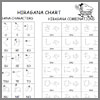
Created by Anne Rajakumar
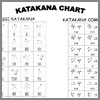
Created by Anne Rajakumar
Created by Miho Takamura, Japan Foundation London
Primary

Extensive research into the Primary languages field in general and Japanese provision in particular provided the foundation for the Ready Steady NihonGO! Primary Japanese Course, a unique scheme
of work for teaching Japanese at KS2, produced by the Japan Foundation
London and Japan Society. The scheme comprises
10 lessons (45 minute each) designed to be delivered by a Japanese
native speaker teacher working with the class teacher. Each lesson
is clearly structured, with comprehensive teachers' notes, National Curriculum
guidelines and a set of accompanying Culture Notes. The course has been hugely
popular during two successful trial periods with teachers and pupils
alike who enjoyed the experience of working with an unusual language.
Ready Steady NihonGO! is available to use
online from the Japan Society
website.
A CD version is also available. See the Japan Society website for more information and to order your copy.
 JFL Japanese Scheme of Work for primary schools - JSOW
JSOW is based on The National Curriculum in England, 2013 and consists of tasks of A1 level, provided by JF Standard for Japanese-Language Education, which was developed by the Japan Foundation in 2010, based on the concept Common European Framework of Reference for Languages (CEFR).
For more information about JSOW and to download, please click here to visit the new JSOW page on our website.
 Resources for Primary Japanese
A Japan Foundation compiled list of useful publications for teaching primary level Japanese, most of them are available to loan from our Book Loan Service
 Learn Japanese with Bocchi & Pocchi
Bocchi & Pocchi are a cute pair of socks created by artist, children’s book author, and illustrator Noriko Matsubara. In short, fun videos on YouTube, Bocchi & Pocchi introduce children to basic Japanese phrases and vocabulary. This is an ideal resource for teachers and parents of younger children who want to learn some Japanese. The Bocchi & Pocchi videos are created as part of an outreach project by Newcastle University project, supported by the Japan Foundation “Sakura Network” programme.
GCSE
Some of these resources may also be useful for other entry level Japanese language qualifications and exams, including IB Ab Initio, ABC Awards and WJEC. Click here for information about the Japanese GCSE Exam.
 力CHIKARA Japanese Teaching Resources for Secondary Schools
CHIKARA is a comprehensive set of teaching resources to support the GCSE curriculum. The resources are designed for students to learn the structure of Japanese language and to practise the language learnt in a communicative setting.
 List of Resources for GCSE
A Japan Foundation compiled list of useful publications for teaching GCSE (most of them are available to loan from our Book Loan Service).
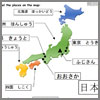 Rajakumar Sensei's Japanese Page
This website features the GCSE Japanese workbooks created by Anne Rajakumar, the Head of Japanese at Hockerill Anglo-European College. These workbooks cover the GCSE syllabus and form a beginner's course which takes between two and four years to teach. The workbooks come in a multimedia version which can be used by students to link to the accompanying video tutorials, and a pdf version, which can be downloaded, printed and used by students to write in.
Click here to watch a video about how to use these resources
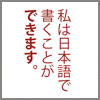 "I Can Write In Japanese" KS4 Revision Materials
I Can Write in Japanese has been developed by the UK team of the J-GAP (Japanese Global Articulation Project). Taking the theme of "expressing one's self," I Can Write In Japanese is a workbook that aims to enable students to use the grammar and sentence structures learned at KS4 correctly in the appropriate context. As tasks range progress from low to high level in stages, students of varying ability can use this resource in order to learn how to express themselves in Japanese. As it includes actual questions from the Japanese GCSE, it can also be used to help students prepare for the GCSE.
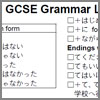 GCSE vocabulary booklet and cards
Made by Tadashi Sakai , Wolverhampton Girls' High School
This resource now includes mini vocabulary cards!
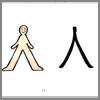 GCSE Picture Kanji cards (Based on the 2003 Specification)
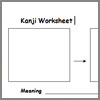 GCSE Kanji cards worksheet (Based on the 2003 Specification)
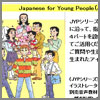 AJALT Japanese For Young People: teacher's manual
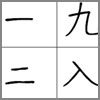 New GCSE Kanji Cards
Based on the new GCSE specification. Created by Mitsue Arai, based on 'Everything You Ever Wanted to Know About the GCSE Japanese Exam Kanji' by Anne Rajakumar
 GCSE Japanese Listening Practice Files
These files include sound files and accompanying worksheets designed for practicing the Listening component of GCSE Japanese. Created by Kita no Kai.
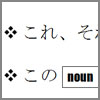 Basic Worksheets for GCSE and WJEC
Including numbers, colours and verbs
GCE (A Level)
Some of these resources may also be useful for standard and higher level IB. Click here for information about the Japanese A Level Exam
 List of Resources for A Levels
A Japan Foundation compiled list of useful publications for teaching A Level (most of them are available to loan from our Book Loan Service).
 Reading materials for AS Japanese - Motto Yomu Chikara
This project has produced three units of reading materials to complement the current 'Chikara for Reading' resources already available from the Japan Foundation. These materials provide reading texts and grammar exercises along with cultural information to help students bridge the gap between GCSE and A-Level. The trial version of this resource has been completed and over 60 CDs have been sent out to teachers of A Level Japanese. Created by 'Motto Yomu Chikara Project Team'.
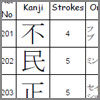 AS kanji list (based on the old specification) (Excel)
Created by Tadashi Sakai, Wolverhampton Girls' High School. A PDF version is available here
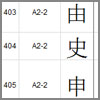 A2 kanji list (based on the old specification)
Created by Tadashi Sakai, Wolverhampton Girls' High School
Higher Education & Adult Education
Lists of kanji and grammar from the textbooks used most frequently at the initial stages of university-level Japanese courses in the UK can be downloaded below:
- Basic Kanji Book
- Genki (1) Kanji
- Genki (2) Grammar
- Japanese for Busy People (1) Kanji
- Japanese for Busy People (2) Grammar
- Minna no Nihongo (1) Kanji
- Minna no Nihongo (2) Grammar
- Kanji Numbers
 Marugoto
Marugoto: Japanese language and culture is a new textbook based upon the Japan Foundation's JF Standard for Japanese-Language Education. The book is mainly targeted at adult learners of Japanese overseas, although it may also be used for secondary education.
Marugoto is designed in such a way that Japanese language and culture can be studied together. It aims to increase communicative skill and responds to the needs of learners who desire to become able to speak in Japanese in as short a time as possible. Through useful topics, audio learning materials and full-colour photographs and illustrations that let you get a glimpse of Japanese life and culture, it is possible to rapidly deepen learners' interest in Japan and Japanese language. This book allows learners around the world to feel the joy of using Japanese and steadily increasing what they can do in the language.
- Marugoto Official Website
- Marugoto PLUS Supplementary website for learners
- Marugoto A2 (Shokyuu 2) Kanji Practice Book
Other Resources
 Japan Foundation Sydney Japanese Classroom Resources Page
Enrich your Japanese classroom with a collection of resources for all learners from The Japan Foundation, Sydney. Although designed for the Australian education system, there’s plenty here for teachers (and learners) of Japanese in the UK.
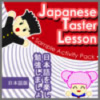 Japanese Taster Lesson Resource Activity Pack (Draft Version)
This resource created by the Japan Foundation London, this Taster Pack is designed for teachers and JTS Programme volunteers looking for ideas for teaching one-off sessions in Japanese. It's packed full of fun games, activities and lesson ideas for introducing basic Japanese language and culture for primary and secondary school pupils.
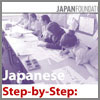 Japanese Step-by-Step: The complete guide for schools & teachers starting Japanese classes
This step-by-step guide outlines how you can get Japanese language classes up and running at your school, be they taught as an extra-curricular or club activity, or fully integrated into the school curriculum or main school timetable.
 Lingu@net Worldwide
Lingu@net Worldwide is a portal site leading to information and links to excellent online resources relating to the teaching and learning of any language. There are over 150 Japanese related sites and it is possible to view the interface in Japanese.
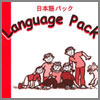 Japanese Language Homestay Pack
A guide for young learners with lots of useful phrases for doing a homestay with a Japanese-speaking family. This book was produced in 2001 by the Japan Foundation London and the Japan Festival Education Trust.
 Japanese Reward Stickers
These stickers have been designed by the Japan Foundation London for teachers to print out on label paper and give to their students. The label template used is Avery L7161.
 “Japan: Partner of the British Economy” Poster
This poster has been created by the Embassy of Japan in the UK and details Japan’s contribution to the UK economy – a great way to demonstrate the real, practical benefits of learning Japanese! It can easily be printed and used as a poster for your classroom.
 Assorted resources and Scheme of Work for Year 9 Japanese
Created by Tom Lockley, Meadowhead School. You will need ActiveSoftware to open the ActivStudio files. If you do not already have this, you can download this free Flipchart Viewer.
 Archives of Mado
Mado is the former newsletter of the Japan Foundation London. These archives include useful teachers' pages.
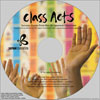 Class Acts
This excellent video created for Japan 2001 documents success stories from the UK Japanese classroom and demonstrates best practice in teaching Japanese in the UK secondary sector.
Feedback on Class Acts
- Very useful to improve teaching and learning and to lobby for more support for the language.
- One of the best tools for professional development I have ever seen.
- We needed Class Acts - wonderful in content and timing.
Eligibility
If you are teaching at a UK school and are thinking of offering Japanese you may be eligible to receive a free copy of Class Acts. For more information please email info.language@jpf.go.jp
The Japan Foundation London Japanese Language Advisors
The Japan Foundation team of Japanese Language Advisors are working to support you with their extensive experience of teaching Japanese. They will be happy to advise you on any issues related to Japanese language education in the UK.
You can make an appointment to visit them at the Japan Foundation by emailing info.language@jpf.go.jp.


 The Japan Foundation, London