Seminar: Takarazuka - A Hundred Years of Song and Dance
The Takarazuka Revue Company, one of the largest theatre groups in Japan, features an all-female cast that specialises in either a “male role” or a “female role” in the musicals, stage dramas and dance revues. Showcasing a wide range of genres, it has attracted a mass audience of mostly female followers, resulting in tickets sales reaching fever pitch levels. But what is the role of Takarazuka in the world of Japanese theatre and what does it signify?
This special event commemorating the 100th anniversary of Takarazuka provides an opportunity to cultivate a cross-cultural understanding of the theatre company through discussion. Beginning with a brief talk by Dr Nobuko Anan, a lecturer in Japanese studies at Birkbeck, University of London, regarding the history and characteristics of Takarazuka, she will be joined by Noriko Tosaka (aka Ai Otohara) and Machiko Nakano (aka Reo Kazami), two distinguished former Takarazuka performers, as well as Jano Williams, co-director of the documentary Dream Girls (1994). Tosaka and Nakano will reflect on their past experiences inside the exclusive, fiercely competitive company whose practices have remained largely unchanged for a century. As arguably one the first filmmakers outside of Japan to capture the elite world of Takarazuka, Williams, a British filmmaker, will speak about their motives for making their insightful film, and what they observed through the camera behind the scenes of the dazzling revue.
Following the discussion, the former Takarazuka performers will take part in a short demonstration illustrating the distinct form of male and female characterisations that the company is so well known for.
This event will extend beyond a simple overview of Takarazuka and together, the speakers, each with their own perspectives, will delve into the impact of Takarazuka, issues associated with Takarazuka, including gender, as well as the societal norms that have created this spectacular scene.
Date:
27 June 2014
from 6.30pm
Venue:
The Japan Foundation, London
Booking:
This event is free to attend but booking is essential. To reserve a place, please e-mail your name and the title of the event you would like to attend to event@jpf.org.uk
Meet the Authors: SHIBASAKI Tomoka and Polly Barton
In celebration of Japanese literature in the UK, join us this March for this rare talk event with multiple award-winning author SHIBASAKI Tomoka and renowned Japanese literary translator Polly Barton. Fluently changing subject between third-person and first-person, SHIBASAKI’s first English-translated book, Spring Garden, is a poetic but foreboding narrative of Taro and his neighbour, NISHI, who holds an obsessive interest towards the old house next door.
In this special talk, Tomoka and Polly will discuss the dazzling novels Spring Garden and the newly translated A Hundred Years and a Day.
'A master class in novel writing… Tomoka Shibasaki rightly won the Akutagawa Prize in 2014 for this sublime novella of dislocation and regret, and Polly Barton’s light, understated translation does it immense justice' - Japan Times
SHIBASAKI Tomoka
SHIBASAKI Tomoka is a Japanese novelist. Her debut novel Kyō no dekigoto (A Day on the Planet) was adapted into a film by YUKISADA Isao in 2004. Her 2007 novel Sono machi no ima wa (That Town, Today) received multiple awards including the Geijutsu Sensho Newcomers Prize. In 2010, her novel Netemo sametemo (Whether Asleep or Awake) received the Noma Literary New Face Prize; the book was subsequently adapted for the screen by HAMAGUCHI Ryusuke as Asako I & II and screened at the 2018 Cannes Film Festival.
In 2014, SHIBASAKI won the Akutagawa Award for Spring Garden, translated into English by Polly Barton and published by Pushkin Press. Her 2023 novel Tsuzuki to hajimari (Continuing and Beginning) received the Minister of Education, Culture, Sports, Science and Technology's Art Encouragement Prize and the Tanizaki Junichiro Prize. Her 2018 work A Hundred Years and a Day was translated into English by Polly Barton and published by Stone Bridge Press in 2025. Her latest novel is Kaerenai tantei (The Detective Who Couldn't Go Home), published in 2025.
Polly Barton
Polly Barton is a writer and Japanese literary translator. Her translations include A Hundred Years and a Day and Spring Garden by SHIBASAKI Tomoka, Butter by YUZUKI Asako, Hunchback by ICHIKAWA Saou, Where the Wild Ladies Are by MATSUDA Aoko, and Mild Vertigo by KANAI Mieko. She is the author of Fifty Sounds, Porn: An Oral History. Her debut novel What Am I, A Deer? comes out in April.
Date:
8 March 2026
from 2.00pm
Venue:
LONDON on 8 March, 14:00~, at Foyles Charing Cross Road
Talk series presented by the Japan Foundation together with Foyles, the Agency for Cultural Affairs and the Japan Publishing Industry Foundation for Culture.
Japanese literature has never been so popular in the UK!
Following the successful talk tour by YUZUKI Asako and TSUJIMURA Mizuki, the Japan Foundation is delighted to present two authors from Japan whom you should watch out for: YAGISAWA Satoshi, the author of the worldwide best-selling novel Days at the Morisaki Bookshop and its sequel, as well as our previous guest YAGI Emi (Diary of a Void) whose new book When the Museum is Closed is now available in English.
Although the two authors have different writing styles and storylines, both sincerely face and examine in their books the lives of women in a complex modern world and their journeys of coping with relatable personal issues.
They will talk about their own books in London and Manchester.
YAGISAWA Satoshi
Debuted in 2010 with Morisaki Shoten no hibi (Days at the Morisaki Bookshop), which was adapted into a hit film and followed up with a sequel publication. His Morisaki Bookshop series has since been translated worldwide, become an international bestseller and was shortlisted for the British Book Awards. His other works include the Junkissa Torunka (Torunka Cafe) series. His hobbies include playing the guitar and he loves coffee and cats.
YAGI Emi
Born in Nagano in 1988, is the award-winning author of Diary of a Void and When the Museum is Closed. Her work has been translated into 25 languages and acclaimed internationally. Her first novel, Diary of a Void, won the Osamu Dazai Prize. She lives in Tokyo and is an editor at a leading women’s magazine.
Date:
13 March 2026
- 14 March 2026
Venue:
LONDON on 13 March, 19:00~, at Foyles Charing Cross Road,
Talk series presented by the Japan Foundation together with Foyles, Manchester Literature Festival, the Agency for Cultural Affairs and the Japan Publishing Industry Foundation for Culture.
Online Roundtable Discussion - True Self in Film from Japan and Beyond
Do we really know who we are and who others are? This is the main theme for the Japan Foundation Touring Film Programme 2026. Because of the complex nature of our minds and emotions, many filmmakers have employed the theme through various forms and narratives. Arguably, examples can be seen in KUROSAWA Akira’s Rashomon and our screening last year of Ichiko by TODA Akihiro, to name only a few. Recently, advanced technologies, widespread social networking services, as well as greater gender diversity, seem to bring fascinating new stories of self-images.
In this wrap-up online talk, we have invited experts who have long-standing careers in the film industries of Japan and the UK, to explore the theme of the true self by illustrating some concrete examples of their choices. Together, they will discuss the narratives, voices, and approaches of filmmakers to this theme by examining the course of film in the past and future.
Special screening with director Q&A - Totto-chan the Movie: The Little Girl at the Window (2023, dir. YAKUWA Shinnosuke)
We've added an extra screening to our bumper day in Cambridge this November, and this time, it's accompanied by a director Q&A session! Join us, together with director YAKUWA Shinnosuke, for a very special screening of Totto-chan the Movie: The Little Girl at the Window (2023).
Totto-chan (ONO Liliana) is an energetic young girl, filled with enthusiasm for the world around her. However, her overwhelming vitality is viewed negatively by her school, which expels her, and Totto-chan is instead enrolled at Tomoe School, an institution founded by headmaster KOBAYASHI Sosaku (YAKUSHO Koji). KOBAYASHI's values differ strongly from those of Totto-chan's previous school: he is a firm believer in the importance of children's independence, and in their freedom to act as they wish and express themselves in their own ways. It is at his school that Totto-chan truly begins to flourish, but in the background, the shadow of impending hardship looms: war is on the horizon.
Frankopan Hall, West Court, Jesus College, Cambridge, CB5 8BL
Price: £5-10 per person
Presented by the Japan Foundation. In collaboration with Scotland Loves Anime; All the Anime; Panorama: The Journal of Travel, Place, and Nature; and Jesus College, University of Cambridge.
Curator's Talk - KITAI Kazuo: Gazing at the Present Moment
Japanese photographer KITAI Kazuo (1944– ) may not be well known in the way other photographers such as MORIYAMA Daido are in the UK. Yet he, as the first recipient of the prestigious Kimura Ihei Award, is regarded as one of the most notable figures in the world of Japanese photography.
Away from strong individuality or radical expression, KITAI’s photography – ranging from a series of shots of the Japanese rural landscape to protests in the 1960s and 1970s – captures ordinary people’s lives. His works share a renewed appreciation for the potential of this medium, offering a time for reflection on things we should have seen but have lost sight of.
For this special talk event, FUJIMURA Satomi (Tokyo Metropolitan Foundation for History and Culture, Arts Council Tokyo), an expert in photography, will explore KITAI’s career as a photographer and his unique style while discussing how his images intertwine with political and social changes in Japan.
This event is co-presented with The Photographers’ Gallery and in conjunction with KITAI’s first solo exhibition in Paris, Kazuo Kitai, l’éloge du quotidien (Kazuo Kitai, in Praise of the Everyday), at the Japan Foundation’s Maison de la culture du Japon à Paris. FUJIMURA is the exhibition curator.
Date:
1 May 2026
from 7.00pm
Venue:
The Photographers' Gallery, 16-18 Ramillies St, London, W1F 7LW
Roundtable discussion - Japanese Fashion on Film, Film as Fabric
The Japan Foundation is proud to partner with London Metropolitan University's Centre for Creative Arts, Cultures & Engagement (CREATURE) as they present this insightful roundtable discussion exploring the intersection of film and fabric within a Japanese context.
Moderated by Professor Wessie Ling, Rachal Bradley, Dr Nicolas Cambridge, Dr Nathalie Khan, and Professor NARUMI Hiroshi will examine the connections and exchanges between the textile history of northwest England and the Japanese avant-garde fashion of Yohji YAMAMOTO, KAWAKUBO Rei, and Issey MIYAKE, seeking to understand fashion on film as a broader register of cultural exchange and to investigate how subcultures emerge.
The discussion is centred around the ongoing work of Rachal Bradley's feature-length non-fiction film, FOLD襞, which is scheduled for national and international distribution in late 2025. The film takes an anthropological look at these iconic Japanese avant-garde fashion designers, and explores how their work resonates beyond Japan, particularly in the northwest of England.
Play readings in Oxford and London - "Women Who Want To Tidy Up" written by NAGAI Ai
Three childhood friends now find themselves in their 50s. When one of them stops answering the phone after a break-up with her boyfriend, the others decide to pay a visit to her apartment. Upon their arrival, they discover the place is full to the brim with clutter, and in a comically escalating (yet ultimately fruitless) attempt to create order from this chaos, they lay bare the messes that have been building up within their own lives...
Featuring a new translation, these readings of leading female playwright NAGAI Ai's ambitious best-seller Women Who Want To Tidy Up mark the first ever British takes on this laugh-out-loud script, exploring relationships, hoarding, aging, menopause, and many more issues most women will relate to at some point in their lives.
Directed by Ria Parry, each of these readings in Oxford and London will also be followed by a post-performance talk with NAGAI Ai herself!
- Oxford - The North Wall Tuesday 11 March, 14:00 FREE but booking required Click here to book
- London - Arcola Theatre Friday 14 March, 14:00 £3 per person SOLD OUT - returns only! Click for more details
Date:
11 March 2025
- 14 March 2025
Venue:
The North Wall, Oxford (11 March) Arcola Theatre, London (14 March)
Get your tickets for the UK’s biggest Japanese film festival, the Japan Foundation Touring Film Programme, starting in February!
From one of the most talked-about social dramas by TAKASHI Miike, Sham, to The Hotel of My Dream, a light comedy based on the novel by the YUZUKI Asako (Butter), our diverse programme offers something for everyone.
We have even invited three filmmakers from Japan to visit various cities – do not miss our exclusive Q&A sessions!
Are you ready?
Directors Q&A Sessions:
IIZUKA Kasho
(Director, Blue Boy Trial)
12 Feb: HOME, Manchester
13 Feb: Institute of Contemporary Arts (ICA), London
14 Feb: Chapter, Cardiff
YOSHIDA Daihachi
(Director, Teki Cometh)
14 Feb: Institute of Contemporary Arts (ICA), London
15 Feb: QUAD, Derby
16 Feb: Showroom, Sheffield
17 Feb: The Ultimate Picture Palace (UPP), Oxford
KAI Sayaka
(Director, Adabana)
25 Feb: Storyhouse, Chester
26 Feb: Riverside Studios, London
27 Feb: Queen’s Film Theatre (QFT), Belfast
3 Mar: Hyde Park Picture House, Leeds
View our full exciting line-up at our official website:
Online roundtable discussion - "Action!": Dealing with Social Issues in Cinematic Narratives
Justice (along with the closely-aligned concept of fairness) is one of the fundamental rights of the human being. Sadly though, history and current affairs prove that this right is not always available to all, causing unresolved issues in society. Many creators have expressed themselves through the arts in response to these issues, and cinema is no exception. In Japan KORE-EDA Hirokazu stormed the world with his breath-taking social film Nobody Knows, but, as seen in the Japan Foundation Touring Film Programme 2025 (JFTFP25), he was not the last or even the first to bring social voices into films.
But what is it that inspires filmmakers to explore the concepts of criminal, social and moral justice in their cinematic narratives, and can films contribute to a public refocusing on the problems citizens might have long turned a blind eye to?
Reflecting the theme of the JFTFP25, Am I Right? Justice, Justification and Judgement, and focusing on non-documentary films, a panel of six film professionals from Japan and the UK will discuss how cinema now and then corresponds to the world we live in, while contemplating the role of cinema in changing society.
Talk event - The Golden Age of Tea Ceremony: Rikyu, Oribe, Enshu
Originally, the Japanese tea ceremony (sado) was simply the practice of preparing and enjoying tea (chanoyu), but it evolved into a unique discipline that emphasised spiritual cultivation and aesthetic refinement. The form of chanoyu perfected by master Sen no Rikyu involved a small group of close acquaintances gathering in an intimate tea room to share food, sake, and tea while engaging in discussions about art and culture removed from worldly concerns. During the era of civil war, this practice aimed to rebuild human bonds that transcended social status.
In the 17th century, with the restoration of peace, samurai tea masters such as FURUTA Oribe and KOBORI Enshu brought significant changes and diversification to architecture, gardens, and tea utensils such as ceramics, and both the boldness and the refined elegance of their styles continue to be cherished by many today.
Together with the Japan Society, we are delighted to present a fascinating talk featuring KOZU Asao, a cultural historian specialising in the history of the tea ceremony, who will explore the evolution of chanoyu across three generations - Rikyu, Oribe, and Enshu - linked by a lineage of master and disciple.
Step into the world of Kabuki with six stunning kimonos worn by the legendary actor BANDO Tamasaburo V, known for his renowned onnagata roles (male actor who performs female roles). Experience the intricate artistry of these garments, highlighting a diverse range of complex textile techniques, encompassing weaving, dyeing, embroidery, and hand-painting. We are delighted to collaborate with the Ashmolean Museum.
We are delighted to be bringing one of Japan's bestselling authors, TSUJIMURA Mizuki (known for Lonely Castle in the Mirror) to the UK in October, in celebration of her newly English translated book Lost Souls Meet Under a Full Moon (『ツナグ』).
Much anticipated, award-winning novel: Lost Souls Meet Under a Full Moon, originally published in Japan in 2011, paints the world of Ayumi, who has the power to bring back the dead to meet the living for one last chance at closure. Each reunion Ayumi oversees reveals clues through which readers can uncover deeply emotional truths in this intensely moving, heart-warming novel.
These talks will provide a rare and limited opportunity to hear directly from TSUJIMURA, the author behind many prominent novels.
Lost Souls Meet Under a Full Moon (『ツナグ』) now available in English, is supported by the Japan Foundation's Support Program for Translation and Publication.
Praise for Lost Souls Meet Under a Full Moon:
'Recalls early Murakami. An enchanting read' - Financial Times
‘A beautifully written novel about hope and kindness’ - Big Issue
TSUJIMURA Mizuki
Born 29 February 1980. Debuted in 2004 after winning the 31st Mephisto Prize for A School Frozen in Time. Received the 32nd Yoshikawa Eiji Literary Prize for New Writers for Lost Souls Meet Under a Full Moon, along with the 147th Naoki Prize for Kagi no nai yume wo miru (A Dream Without a Key) and first place in the 15th Japan Booksellers' Award for Lonely Castle in the Mirror. Many of her works have been adapted for screen, and several of her works, including A School Frozen in Time, Lonely Castle in the Mirror, and Lost Souls Meet Under a Full Moon, have been published in translation, reaching readers around the world.
Date:
9 October 2025
- 12 October 2025
Venue:
LONDON on 9 October, 19:00~, at Foyles Charing Cross Road,
Numerous Japanese animators have laid the foundation for Japanese animation. Like MIYAZAKI Hayao, some of them even sparked a global sensation, helping to establish the reputation and high standards of Japanese anime as we know it today. However, the list of notable names is by no means exhaustive.
OHTSUKA Yasuo (1931 – 2021) is one such animator whose contributions deserve greater recognition. A leading figure in Japanese animation, OHTSUKA actively contributed to the field from the early 1950s. In the 1960s, he recognised the talents of TAKAHATA Isao and MIYAZAKI Hayao, enthusiastically nurturing them and collaborating on now world-famous works such as Lupin III: The Castle of Cagliostro.
As part of Kotatsu Japanese Animation Festival, in which the Japan Foundation has been involved as a partner, KANOH Seiji, specially appointed professor at Tokyo Zokei University who has researched OHTSUKA and his achievements for 30 years, will discuss the significance of OHTSUKA’s work and ethos in this exclusive online talk, as well as the lasting impact he has had on anime fans and creators for generations to come.
About Professor KANOH Seiji
A Japanese film scholar, specially appointed professor at Tokyo Zokei University, and representative of the Institute of Isao Takahata & Hayao Miyazaki Films.
As a leading scholar of Japanese animation, Professor KANOH has served as a planning advisor and catalogue contributor for major exhibitions including “Isao Takahata Exhibition: His Legacy to Japanese Animation” (2019, Tokyo); “The Man Who Made Japanese Animation” (2025, Tokyo); and “Isao Takahata: Pioneer of Contemporary Animation, from the Post-War Era to Studio Ghibli” (2025, Paris).
His publications include “The Complete Works of Miyazaki Hayao” and “The People Who Built Japanese Animation: New Edition”.
Following the popular London screening this September, the Japan Foundation and Panorama: The Journal of Travel, Place, and Nature are pleased to bring Drops of Heavento Cambridge this November! This captivating documentary features TATSUMI Yoshiko, Japan’s legendary culinary artist and writer of “Inochi no soup”, (the “soup of life”), a work devoted to using natural, nourishing ingredients.
Framed by the serene beauty of rural Japan, viewers can witness TATSUMI’s thoughtful approach to food and the rhythms of a slower, more connected life.
As conversations around sustainable living and nature-focused wellbeing continue to grow, this quietly powerful 2012 film feels more relevant than ever to our modern life.
As part of the Kotatsu Japanese Animation Festival 2024, with which the Japan Foundation is proud to partner, animation director OGAWA Iku is joining us for a very special talk revealing the behind-the-scenes of stop-motion film-making. Giving exclusive insights into the direction and character creation processes of the animated works he has been involved in, such as HIDARI (screened at the 2024 Kotatsu Festival) and Netflix's Pokémon Concierge, OGAWA will discuss what it is like to work in the Japanese animation industry - don't miss this rare opportunity to discover its fascinating inner workings!
For the first time, this talk will be given with British Sign Language interpretation.
Talk event - Tokyo Through Time: Hanga Prints in a Changing Capital with KOYAMA Shuko
When you think of Japanese woodblock print-making, you likely think of the 18th-and-19th-century greats: KITAGAWA Utamaro, KATSUSHIKA Hokusai, and UTAGAWA Hiroshige are all well-known around the world for their ukiyo-e works, but the art of woodblock printing continued to prosper well beyond their times. In fact, the artform thrived well into the more modern times of the 1920s and 1930s, evolving beyond ukiyo-e along the way, with a number of its artists using it to express their own unique takes on the liveliness of a newly-modernised Tokyo.
In this special talk event, KOYAMA Shuko, curator at the Edo-Tokyo Museum in Tokyo, will give an illustrated talk on hanga (woodblock print) works, with a particular focus on the 1920s and 1930s and the ways in which the artists of this time captured the changing city of Tokyo, while also comparing this more modern hanga to its ukiyo-e predecessors.
This event is organised in celebration of the opening of Tokyo, naissance d'une ville moderne (Tokyo, the Birth of a Modern City) at the Japan Foundation's Maison de la culture du Japon in Paris.
Scotland tour: "Confessions of a Shinagawa Monkey" produced by Vanishing Point and Kanagawa Arts Theatre
The Japan Foundation is proud to partner with theatre company Vanishing Point as their production of Confessions of a Shinagawa Monkey, based on the surreal stories by MURAKAMI Haruki and co-produced by Kanagawa Arts Theatre, tours Scotland.
Mizuki is a young woman whose life, job, and husband all seem ordinary, until one day she forgets her name. Disturbed by deepening consequences, she seeks solace in makeshift counsellor Mrs SAKAKI, who leads the two on a journey of discovery through both the tunnels of Tokyo and the annals of SAKAKI's subconscious. Bathing amidst the mountains of Japan, a traveller is shocked to discover a talking monkey tending the hot spring. Conversation ensues, and the monkey tells of how he learned ‘human language’, came to appreciate the music of Bruckner and Richard Strauss, and now teeters on the edge of a profound, alarming confession.
Featuring performers from Scotland and Japan, human and puppet monkeys, lurking shadows, stunning sound, and a distinctive visual language, Confessions of a Shinagawa Monkey will draw you into the inimitable, dream-like domain of one of the world’s best-loved living authors.
Performed in English and Japanese, with full dialogue captioning built into the stage design.
Talk event - Defining Japanese Fashion: From Meisen Kimono to Issey Miyake
Japan has fabricated a unique and distinctive fashion culture. In recent years, subcultures like Gothic Lolita ("Goth-loli") and avant-garde fashion designs, such as those by Comme des Garçons, have had a significant impact on global fashion. Why has Japan developed such a unique fashion culture? How is contemporary Japanese fashion connected to Japan's past?
In this talk, Professor NARUMI Hiroshi will explore the evolution of fashion in Japan during the country's 20th-century modernisation. Through key trends such as the Taisho-era Meisen kimono, the rise of the Modern Girl, the westernisation of Japanese clothing, and post-war youth fashion, he will discuss how Japanese fashion reflects the nation’s changing identity, offering a fresh perspective on the complex relationship between clothing and culture.
Artist talk - KAWAUCHI Rinko: Reflections on Past and Future
KAWAUCHI Rinko is one of Japan’s most prominent contemporary photographers. Her work is exhibited globally, including a 2006 solo exhibition at The Photographers’ Gallery in London, and is often described as poetic, offering an ethereal, dream-like perspective on the everyday world we inhabit without being constrained by any one particular theme.
In celebration of her new exhibition at Arnolfini in Bristol, Rinko Kawauchi: At the edge of the everyday world (supported by the Japan Foundation and opening on 19 October), KAWAUCHI will be visiting London to reflect on her works to date, focusing on the past 10 years. She will introduce the ethos behind them, along with the philosophies that drive her photographic practice, giving an exclusive insight into the enthralling images she produces.
KAWAUCHI Rinko
KAWAUCHI Rinko is an internationally-acclaimed photographer who has appeared in countless group exhibitions, including for the Deutsche Börse Photography Prize 2012 at The Photographers' Gallery in London and for the Brighton Photo Biennial 2010 'New Documents' in Brighton. She has published a multitude of photobooks, and has held solo exhibitions near-continuously since 1998, including a 2006 major solo exhibition at The Photographers’ Gallery. Her photography utilises even the smallest aspects of everyday life as a vessel by which to capture poetic reflections on themes of care, identity, sustainability, humanity, and nature, and has won her numerous awards and accolades, including an Honorary Fellowship from the Royal Photographic Society in 2012 and an Outstanding Contribution to Photography Award in 2023.
Double-bill screening - Kamome Diner (2005, dir. OGIGAMI Naoko) and Key of Life (2012, dir. UCHIDA Kenji)
We're returning to Cambridge for another special film screening event, and this time we're bringing not just one, but two films!
In collaboration with Panorama: The Journal of Travel, Place, and Nature and Jesus College, University of Cambridge, join us for FREE screenings of Kamome Diner (2005, dir. OGIGAMI Naoko) and Key of Life (2012, dir. UCHIDA Kenji).
Kamome Diner dir. OGIGAMI Naoko, 2005, 102 min, English subtitles Summer arrives in Helsinki, bringing with it the opening of a small Japanese eatery known as Kamome Diner. After a slow start, the shop gradually begins to grow in popularity, yet no-one ever orders the "soul food" rice balls made by its 38-year-old owner, Sachie (KOBAYASHI Satomi). Screening at 14:30 GMT
Key of Life dir. UCHIDA Kenji, 2012, 128 min, English subtitles Failed actor SAKURAI (SAKAI Masato) visits a bathhouse to purify himself before ending it all. When wealthy fellow patron KONDO (KAGAWA Teruyuki) takes an amnesia-inducing fall, SAKURAI spots an opportunity to escape his current struggles and assumes KONDO's identity. Screening at 17:00 GMT
Date:
16 November 2024
Venue:
Frankopan Hall, West Court, Jesus College, Cambridge, CB5 8BL
Presented by the Japan Foundation in collaboration with Panorama: The Journal of Travel, Place, and Nature and Jesus College, University of Cambridge.
The Japan Foundation Touring Film Programme is back for 2025!
From 7 February to 31 March, discover 26 diverse Japanese films at 33 cinemas in 32 cities, spotlighting cinematic ideas of justice, justification, and judgement against today's backdrop of ever-changing values and perspectives. From cult classics to cutting-edge independent cinema and drama to comedy, there's something for everyone!
Find out what films are showing, and where, on our official website:
Talk event - MORIIZUMI Takehito: Manga, Literature, and OBAYASHI
MORIIZUMI Takehito is a Japanese manga artist and an illustrator by profession. Having debuted in 2010 with Mary in the Forest, his representative manga works include Serie and Asleep, a post-apocalyptic science fiction tale. His unique technique of drawing initially with just water, then by dropping ink onto the paper and using toothpicks and chopsticks, among other unconventional tools, to fill in the details not only distinguishes him from other manga artists, but also allows him to create very poetic expressions of his highly intellectual story lines.
His professional activities are also characterised by his passionate involvement in literature: he has provided illustrations for Japanese literature publications and produced graphic adaptations of a variety of novels by esteemed authors including Franz Kafka, George Orwell, and MURAKAMI Haruki. Owing to his deep knowledge of and great interest in literature, he was once described by Japanese media as “a manga artist who is more of a literary figure than a novelist”.
In this special talk, MORIIZUMI will showcase his career and his works, explaining his unique creative process as well as the ethos behind his creations. As the son-in-law of late film director OBAYASHI Nobuhiko, and having once worked very closely with him, MORIIZUMI will also touch upon his personal relationship with OBAYASHI.
Special screenings - Beyond Anime: Independent Animation from Japan
In partnership with The Garden Cinema, we're excited to bring you a rare opportunity to see some of the best independent Japanese animation in recent years on the big screen, featuring an introduction from programme curator Alex Dudok de Wit!
Anime is a global phenomenon. But there is much more to Japanese animation than the franchises and studio productions that get the lion’s share of attention. Filmmakers working independently, sometimes almost alone, are creating some of the wildest, most beautiful animation out there, as they experiment with artistic techniques and ways of telling stories.
Clay waves that speak poetry, pointillist landscapes bursting with colour, a candid documentary about periods, an absurdist conspiracy thriller about small people with hats: the short films in this programme, all made by Japanese directors in the past 12 years, cover a dizzying range of styles and narratives.
Special screenings with director Q&A - The Works of ENDO Maiko
The Japan Foundation is proud to partner with the Centre for Contemporary Arts (CCA) in Glasgow and the Institute of Contemporary Arts (ICA) in London for athese special screening events featuring director ENDO Maiko, including an In Focus series at ICA.
Don't miss this rare opportunity to witness ENDO's profound, thought-provoking experimental films, accompanied by a pair of Q&A sessions with the director herself - see below for more details and to get your tickets.
Screenings
Kuichisan dir. ENDO Maiko, 2011, 76 min, English subtitles Screening from a 35mm print and presented in a mixture of colour and monochrome, Kuichisan paints a striking, dreamlike picture of a boy's (played by ISHIHARA Raizo) wanderings through an Okinawan town. Screening at: Centre for Contemporary Arts, Glasgow Tuesday 15 October 2024, 19:30 (with director Q&A) Concluded - click for more details
Technology dir. ENDO Maiko, 2016, 73 min, English subtitles Filmed in Iceland and India, Technology tells the surreal story of the search for a sacred flower and a child from the moon (Bobbi Salvör Menuez) drawn towards the dangerous business of dealing its seeds. Screening at: Institute of Contemporary Arts, London Saturday 26 October 2024, 14:40 Click to book
Jizai dir. ENDO Maiko, 2024, 14 min, English subtitles Based on the real-life INAMI JIZAI BODY PROJECT, Jizai playfully explores what is needed for AI to challenge the limits of human capabilities, and how senses and emotions can interact with robotics. Screening at: Institute of Contemporary Arts, London Sunday 27 October 2024, 18:00 (followed by Tokyo Telepath 2020) Click to book
Tokyo Telepath 2020 dir. ENDO Maiko, 2020, 49 min, English subtitles The year is 2018, and preparations for the Olympics are hiding a programme that will digitise Tokyo's inhabitants and control their minds. Meanwhile, two telepathic girls (Natsuko, Luka) receive a special task. Screening at: Institute of Contemporary Arts, London Sunday 27 October 2024, 18:00 (preceded by Jizai) Click to book
Date:
15 October 2024
- 27 October 2024
Organised by the Centre for Contemporary Arts and the Institute of Contemporary Arts. In partnership with the Japan Foundation.
This July, we're delighted to bring you an enthralling one-off concert that blends KAWAI Ikuko's globally acclaimed, refined brand of classical violin performance with traditional Japanese accompaniment courtesy of shakuhachi player KOMINATO Akihisa and hand drum player MOCHIZUKI Satasuke.
Set against the awe-inspiring backdrop of London's majestic Actors' Church, the trio will perform a variety of pieces, including KAWAI's original compositions that have enchanted audiences the world over.
Make sure you don't miss this phenomenal fusion of Western classical and Japanese traditional music!
Lecture and workshop - Beyond Tatami: Agriculture and Crafts in Oita
Oita Prefecture's Kunisaki Peninsula and its Usa area are deemed a Globally Important Agricultural Heritage System (GIAHS) by the United Nations Food and Agriculture Organization in recognition of their sustainable agricultural traditions, and are home to various local plants, including shiitake mushrooms and shichitoi (a type of tatami grass/soft rush). Shichitoi in particular is unique to the region and is revered for its superior sturdiness and durability; as such, this special plant is widely used for tatami-making, as well as other craftworks.
In this very special event, HAYASHI Hiroaki, President of the Kunisaki Peninsula Usa Area GIAHS Promotion Association, will begin by giving an overview of the importance of agriculture in the region, introducing some of the materials harvested there.
This will be followed by expert craftsperson IWAKIRI Chika demonstrating the making of enza (small, round cushions) using shichitoi, after which workshop ticketholders will have the unique opportunity to get hands-on with this special material as they make their very own miniature shimenawa (a type of traditional rope) and, time permitting, misanga (a type of good luck charm).
This event has limited availability – book now at the link below to secure your place.
Elena Hall, West Court, Jesus College, Cambridge, CB5 8BL
Price: £5-£20* per person - limited availability *£5 to attend the lecture/demonstration and observe the workshop. £20 to attend the lecture/demonstration and participate in the workshop. NEW FAMILY/GROUP TICKET: £60 for four people to attend the lecture/demonstration and participate in the workshop.
Co-organised with Jesus College, University of Cambridge; Panorama: The Journal of Travel, Place, and Nature; and Oita Prefecture. In collaboration with the ‘Spotlight on Local Japan’ project by Japan House London and the Japan National Tourism Organization (JNTO).
The Kotatsu Japanese Animation Festival is back for 2024, and we're delighted to once again partner with the festival to bring you the very best in Japanese animation past and present!
This year's festival takes place in October, visiting Chapter in Cardiff from 5 to 6 October, and Aberystwyth Arts Centre in Aberystwyth from 25 to 27 October. With a trio of Welsh premieres in Cardiff, and films spanning genres from mecha to drama, there's something for everyone to enjoy!
We're proud to co-present with the Royal Society of Arts, a special screening of documentary Drops of Heaven.
Featuring TATSUMI Yoshiko, Japan’s legendary culinary artist and writer who is famous for “Inochi no soup”, (the “soup of life”) using natural and nutritious ingredients. Amidst stunning scenery of the Japanese landscape, viewers can witness TATSUMI’s philosophy on slow food and nurturing life.
Lecture and demonstration - Sencha: Salon Culture and the Art of Infused Tea
Japan is renowned for its tea ceremonies. While the more well-known chado uses matcha tea powder, gatherings involving sencha use tea leaves. The origins of sencha, and the way in which the sencha is appreciated, are also unique in that they take place against a backdrop of intellectual gatherings known as "salons", occasions originating in the mid-Edo period that are used primarily to discuss arts and culture.
In this very special event, Sencha Master TSUKUDA Shio, successor to the Issa-an sencha tea school in Osaka, will give an illustrated talk about the history of sencha and the salon culture in which sencha played a key role, while also demonstrating the exquisite manner in which sencha is prepared and how it can be appreciated in daily life.
Participants will even be able to enjoy sencha prepared by TSUKUDA himself!
TSUKUDA Shio
Successor of the Issa-an sencha tea school, which inherits the salon culture of the bunjin (literary figures) of the Edo period. At the G20 Osaka Summit 2019, he was in charge of the sencha tea gathering held as part of the Partners' Program. He is also a member of the international research project ‘Creative collaborations: salons and networks in Kyoto and Osaka 1780–1880’ (led jointly by the British Museum and Ritsumeikan University, Kyoto), as well as a part-time lecturer at Kansai University.
Elena Hall, West Court, Jesus College, Cambridge, CB5 8BL
Price: £10 per person (£7 concessions) - limited availability
In collaboration with Panorama: The Journal of Travel, Place, and Nature and Jesus College, University of Cambridge. Special thanks to NISHIHARA Sakiko.
Lecture and demonstration - Carving a Character: The Hidden Craft of the Noh Mask with KITAZAWA Hideta
Noh theatre is a major traditional Japanese performing art, recognised as an Important Intangible Cultural Property by the Japanese government and as an Intangible Cultural Heritage of Humanity by UNESCO. Though characterised by the stylised movements and singing of its actors, it would not be complete without the unique, carefully-carved masks they wear as they perform. These allow Noh actors to control their character’s expression by making minute changes to the angle from which the audience sees their mask.
In this special one-off event, organised in celebration of the series of activities Tradition to Modernity: Understanding Noh Theatre from its Establishment 650 Years Ago to Contemporary Times taking place in August and September, KITAZAWA Hideta, master craftsperson and second-generation Noh mask-maker, will introduce the fascinating world of Noh masks, demonstrating the techniques used to make them while offering a rare chance to take a closer look at these wooden works of art. He will also present some of his more recent creations inspired by contemporary characters.
KITAZAWA Hideta
KITAZAWA Hideta is a wood sculptor and Noh mask maker based in Tokyo. He learned traditional wood carving of Buddhist and Shinto statuary from his father, KITAZAWA Ikkyo, and later studied Noh mask carving. He currently produces classical Noh and Kyogen masks and has been designated a master craftsman by the Tokyo Metropolitan government. KITAZAWA has also created numerous shinsaku - “new” - masks for foreign-language Noh productions, notably those of Theatre Nohgaku, as well as for other Noh-influenced plays. He has given workshops and demonstrations in Japan and internationally, and a book on his work entitled Noh and Kyogen Masks will be published by Prestel in September 2024.
We are proud to collaborate with the Daiwa Anglo-Japanese Foundation as they present Life on Planet Earth, photographer NOGUCHI Rika’s first UK solo exhibition since 2004.
Featuring both photographic and video works, the exhibition conveys a sense of wonder at being in the world from various perspectives: though NOGUCHI became known for the human figures her earlier works took up as their subjects, she has since broadened her practice to also explore the ways in which other creatures – birds, mammals, fish, and insects – experience our world. Humanity is not unaccounted for, however, with video works such as The Lucent Sea (2021/2023, commissioned by the Japan Foundation) and To the Night Planet (2015) investigating alienness and alienation among human beings.
Music Concert: Kimura & Ono with Kit Downes Betwixt Mortality & Immortality Surpassing Entities, Separate Entities
Embark on a Japan-UK musical odyssey as Kit Downes on piano harmonises with KIMURA Shunsuke on the shinobue (traverse bamboo flute) and ONO Etsuro on Tsugaru shamisen (three string banjo). In partnership with The Japan Foundation.
The Japan Foundation is delighted to take part in the UK tour of award winning Japanese author MURATA Sayaka, (best known to audiences outside of Japan for her best-selling novel Convenience Store Woman), for a series of enlightening talks on her novel Vanishing World, (『消滅世界』) now available in English. Vanishing World depicts a timeline in which sex between married couples is taboo, and children are born through artificial insemination. Known for her intriguing and off-beat writing style, MURATA's latest novel forces readers to examine the norms of the world around them, in this imagined dystopian reality.
Praise for Vanishing World:
Makes the ordinary world as we see it look strange again... Publishers will continue to seek out imitations of [Sayaka's] vision - but why bother, when the real thing is so good? - Financial Times
An eye-popping plot... It invites us to consider how reproductive gender equality could transform society, with chilling ramifications - New York Times
MURATA Sayaka
Whilst working at a convenience store herself, MURATA debuted Junyu, her first novel in 2003, for which she received the Gunzo Prize for New Writers. Despite her increasing fame as a writer, MURATA continued to work as a convenience store clerk until 2017, throughout which time she also received the Mishima Yukio Prize for Of Bones, Of Body Heat, Of Whitening City in 2013, and the prestigious Akutagawa Prize in 2016 for Convenience Store Woman, for which she was also named one of Vogue Japan's Women of the Year.
Date:
17 October 2025
- 22 October 2025
Venue:
CHELTENHAM on 17 October, 20:00~ at The Times and Sunday Times Cheltenham Literature Festival,
Roundtable Discussion: What makes Japanese Cinema Memorable?
As part of the Japan Foundation Touring Film Programme 2024, and in view of its theme of Unforgettable: Memories, Times and Reflections in Japanese Cinema, this roundtable discussion reunites a panel of UK- and Japan-based experts in Japanese cinema from last year’s online talk series to reflect on Japanese films that embedded themselves in their minds, and to explore what makes Japanese cinema memorable.
Special screening - Mori, The Artist's Habitat (2017, dir. OKITA Shuichi)
Join us in Cambridge for a special FREE screening of Mori, The Artist's Habitat (2017, dir. OKITA Shuichi), in collaboration with Panorama: The Journal of Travel, Place, and Nature and Jesus College, University of Cambridge.
94-year-old painter KUMAGAI Morikazu (YAMAZAKI Tsutomu), also known as Mori, has hardly left his property for the last 30 years. Most of his day is spent tirelessly observing his garden and all the living things in it, which he renders into paintings every evening in a studio he calls the "school." While he goes about his business, his wife Hideko (KIKI Kirin) attends to a stream of visitors. Mori and Hideko live peacefully, surrounded by the things they love, until one day, a group of developers decide to build a condominium next door, putting their small paradise under threat. If the condominium is built, it will block the sun, and the garden will become uninhabitable, so Mori and Hideko decide to take action to protect the garden they cherish...
Mori, The Artist's Habitat is a humorous depiction of a summer day in the life of an old couple who've been together 52 years, set in the more affable social atmosphere of the 1970s.
Elena Hall, West Court, Jesus College, Cambridge, CB5 8BL
Please note: this event takes place immediately after "Carving a Character: The Hidden Craft of the Noh Mask", but is open to all, including those not attending "Carving a Character: The Hidden Craft of the Noh Mask" beforehand. Simply book a free screening ticket at the Panorama Journal website linked above. If you are attending "Carving a Character: The Hidden Craft of the Noh Mask" and would like to watch Mori, The Artist's Habitat afterwards, please make sure to also book a free screening ticket at the Panorama Journal website linked above.
In collaboration with Panorama: The Journal of Travel, Place, and Nature and Jesus College, University of Cambridge.
Junko Takekawa at The Times and Sunday Times Cheltenham Literature Festival 2024
We are thrilled to announce that our Senior Arts Programme Officer, Junko Takekawa, will be speaking at The Times and Sunday Times Cheltenham Literature Festival as part of its free programme.
Join Junko, along with journalist and editor Sarah Shaffi, to learn more about some Japanese literature worth reading. No ticket is required - just turn up!
Date:
5 October 2024
from 12.30pm - 1.00pm
Venue:
The Huddle, The Times and Sunday Times Cheltenham Literature Festival, Cheltenham
Talk event - Capturing Beauty and Power in Structure: ISHIMOTO Yasuhiro with ASAKURA Mei
ISHIMOTO Yasuhiro (1921-2012) remains one of Japan’s leading photographers. Born in the USA to a pair of Japanese immigrant farmers, ISHIMOTO studied both in Japan and at the Institute of Design in Chicago (also known as the New Bauhaus), where he was taught photographic technology by Aaron Siskind and Harry Callahan. After returning to Japan in the mid-1950s, he photographed the Katsura Rikyu (Katsura Imperial Villa). His work was praised highly, and so ISHIMOTO was pushed into fame, not least because his masterpieces were a breath of fresh air for the world of Japanese photography, employing modernistic expressions of the structural and stylistic power his photographic subjects held.
In celebration of the exhibition Yasuhiro Ishimoto. Lines and Bodies at LE BAL in Paris (19 June to 17 November), the Japan Foundation, London, together with The Photographers’ Gallery, will host a talk by ASAKURA Mei (curator at The Museum of Art, Kochi) exploring the legendary photographer while illustrating the characteristics of his works and the legacy he left. The Museum of Art to which ASAKURA belongs is home to the Ishimoto Yasuhiro Photo Center, a facility that holds almost the entirety of ISHIMOTO’s works, leaving ASAKURA uniquely positioned to share insights unmatched in depth and expertise.
Meet the Author: TAWADA Yoko, author of Spontaneous Acts
Join TAWADA Yoko, the multi-award-winning author of The Last Children of Tokyo and Scattered All Over the Earth, for an insightful pair of talks celebrating her latest UK release, Spontaneous Acts. TAWADA will visit London’s Libreria bookshop, along with Cheltenham for The Times and Sunday Times Cheltenham Literature Festival.
About TAWADA Yoko
TAWADA Yoko was born in Tokyo in 1960, educated at Waseda University and has lived in Germany since 1982, where she received her PhD in German literature. She received the prestigious Akutagawa Prize for The Bridegroom Was a Dog. She writes in both German and Japanese, and in 1996, she won the Adalbert-von-Chamisso Prize, a German award recognizing foreign writers for their contributions to German culture. She also received the Goethe-Medal, an official decoration of the Federal Republic of Germany, and the prestigious Kleist Prize (2016).
In conjunction with MORIIZUMI Takehito and his wife OBAYASHI Chigumi, there will be two special film screenings at the Garden Cinema in London for the films of OBAYASHI Nobuhiko.
OBAYASHI began his career with a largely experimentalist style but ultimately explored different genres throughout his life. His films feature themes of youth, love, and war.
6 August 18:00 ~His Motorbike, Her Island. Followed by a Q&A with OBAYASHI Chigumi, the director's daughter, as well as her husband MORIIZUMI Takehito, distinguished manga artist and illustrator.
Possessed by Photography: The Legendary Master DOMON Ken - Talk by TANAKA Kotaro
Attend TANAKA Kotaro's talk on DOMON Ken to discover the renowned photographer. Gain insights about his iconic works and explore his relationship with contemporaries such MORIYAMA Daido and ARAKI Nobuyoshi. Discover how DOMON's photography reflects the society he lived in.
In collaboration with William Morris Gallery, we're proudly presenting the UK's most wide-ranging exhibition dedicated to Mingei, the influential folk-craft movement originating in Japan during the 1920s and 1930s. Showcasing a diverse array of works including ceramics, woodwork, textiles, and more, this exhibition explores Mingei's cultural significance and its enduring relevance in contemporary craft and consumerism.
Date: now on, until 22 September 2024 Venue: William Morris Gallery Click here for details
Meet the Author Tour: YUZUKI Asako, author of Butter
Join award-winning author YUZUKI Asako, known for her tantalising thriller Butter, for a series of enlightening talks on the book and its background. YUZUKI will visit 6 cities, including Cheltenham for The Times and Sunday Times Cheltenham Literature Festival and Manchester for the Manchester Literature Festival.
About YUZUKI Asako
Born in Tokyo in 1981. Won the All Yomimono Award for New Writers in 2008 for “Forget Me, Not Blue,” which was included in her debut work Shuten no ano ko in 2010. Won the Yamamoto Shugoro Prize in 2015 for Nile Perch no joshikai (Nile Perch Women's Club). Among her many other hit works, BUTTER was published in 2017.
Talk event - The Birth of Fashion: Trends, Aesthetics, and Edo Kimono with NARUMI Hiroshi
Have you heard about V&A Dundee’s ongoing kimono exhibition? Perhaps you attended our online talk on kimono back in 2020? The kimono is an object of national pride in Japan, long beloved by Japanese people and influential even within the western world. Yet, unfortunately, kimono in modern Japan have been relegated to a sort of costume, worn only on specific special occasions. Perhaps the kimono, now overshadowed by western attire, is no longer considered a driving force in fashion – indeed, fashion itself is a concept generally considered to have been born in western Europe, from where it spread to the rest of the world, Japan included. But is that really the case?
Keeping this question in mind, sociologist and Japanese fashion theorist Prof. NARUMI Hiroshi will discuss how trends and aesthetics surrounding kimono came into being and changed over the course of the Edo period (1603-1868), a period during which many notable cultures flourished. Paying close attention to the trends seen among the groups active at the time – those in power, industry insiders, creators, performers, and young people – NARUMI will also explore in what ways kimono constituted fashion, and just how trail-blazing a fashion culture emerged.
Online talk - Godzilla Vs. Human: Rethinking the Monster
Godzilla is an enormous fictional monster created in Japan but hugely popular worldwide. Originating from a scenario by KAYAMA Shigeru (who would later pen a pair of novelisations reinforcing his original vision), the creature evolved as it took cinematic form, reflecting the socio-political fragility and fear of scientific and technological progress of its time.
With this year marking the 70th anniversary of the first Godzilla film’s release in 1954, and the Barbican Centre's All Kaiju Attack! film season taking place throughout August, this spectacular series of film productions is once again the centre of attention. In this special talk, experts from the worlds of both film and literature will look back on the works that make up the Godzilla series as they explore the creature’s significance and the ways in which the fantasies and messages within the franchise are relevant to real life.
Speakers
Dr. Jeffrey Angles, Professor at Western Michigan University and translator of Godzilla and Godzilla Raids Again, the novels by franchise-spawning screenplay writer KAYAMA Shigeru Steven Sloss, film critic, writer, and lifelong kaiju fan Alex Davidson (moderator), Cinema Curator at the Barbican Centre
Wales Special Event: 2025 Kotatsu Japanese Animation Festival
This year's Kotatsu Japanese Animation Festival will take place throughout September and October in three venues throughout Wales. From The Colors Within to Summer Wars, the festival screens the best in Japanese anime and culture, featuring a BSL interpreter at Chapter (Saturday only) to reach a greater disabled audience.
Transformation! Ninja and its Image in the World and Japan - Talk by Prof. YAMADA Yuji
Discover the world of Ninja! Join our talk with Prof. YAMADA Yuji and learn how the perception of these iconic figureshas evolved over time using some cinematic examples.
The Japan Foundation Touring Film Programme 2024 is the largest ever!
Starting off on 2 February, the programme visits 30 cities in the UK, including Oxford, Lancaster, Chichester, Liverpool and as far as Orkney, as new stopovers!
Based on a theme of memories, there are 24 films - from with diverse genres such as human drama, horror, LGBTQ films, comedy, and sci-fi…and most of them are UK premieres. There’s a cinematic treat for everyone!
For screening dates and times at locations near you, please visit:
Following on from the Japan Foundation Touring Film Programme 2024 (JFTFP24) in February and March, we are delighted to announce that JAPANESE FILM FESTIVAL ONLINE, first launched in 2020, will now also be held in the UK from 5 June at 4am until 3 July at 4am (all times BST).
For the first two weeks of the festival, 18 Japanese films will be available for streaming, with 2 television drama series that were popular in Japan being made available for the festival’s second half.
Enjoy the diverse world of Japanese cinema in person and also online this year!
DAZAI Osamu, a renowned literary figure in Japan, left a lasting impact despite his short life from 1909 to 1948, through numerous novels now emblematic of modern Japanese literature. Prior to the London performance of Good-Bye at the Coronet Theatre, a round table discussion featuring experts will delve into DAZAI's life, works, and his enduring influence in Japan and beyond, including an overview by Dr. Irena Hayter from the University of Leeds.
The panelists for this roundtable discussion are: Dr. Irena Hayter (Associate Professor of Japanese Studies at the University of Leeds), Jagoda Kamov (Theatre director, writer, and actress), MIURA Motoi (Representative and the director of theatre company Chiten), and James Garza (Assistant Professor of Translation Studies at International Christian University)
Talk event: Mingei Then and Now with YOSHIZAWA Tomo
The Mingei Undo was a revolutionary cultural movement in Japan which started in 1926. Grandfathered by YANAGI Soetsu, it intended to identify and treasure the beauty of the hand-made works produced by anonymous craftsmen, each one created amidst the climate of each local region and to its specific daily needs. It was born against the backdrop of an existing notion that only ornately-decorated ornamental pieces had value as works of art. The re-discovery of beauty in Mingei covers media from ceramics to textiles, with the works of HAMADA Shoji regarded as some of the most representative of the movement, including within the UK.
In celebration of the exhibition Art Without Heroes: Mingei at William Morris Gallery in London, the Japan Foundation and Dovecot Studios will host a talk by YOSHIZAWA Tomo, a key partner of the exhibition, that will examine the historical significance of Mingei along with its socio-economic impact. As a granddaughter of MUNEHIRO Rikizo, a Preserver of Important Intangible Cultural Property, Tomo will also delve into Mingei’s influence on contemporary makers and craftsmen, along with the relationship between maker and user, by focusing on MUNEHIRO’s textile works.
To book, please click here for our booking form. Please note that the confirmation email system is not automated and is subject to office opening hours.
Diary of a Void – a subversive tale that delves into the complexities of lies, life, and female interiority (co-translated by David Boyd and Lucy North). We are delighted to invite YAGI Emi the author behind this award-winning debut book, to the UK.
She will jointly appear at The Times and Sunday Times Cheltenham Literature Festival with KAWAGUCHI Toshikazu, the author of the million selling Before the Coffee Gets Cold series. Following the festival, YAGI Emi will tour the country, including London.
Date: Sunday 8 Oct 16:30
Venue: Town Hall, Pillar Room, The Times and Sunday Times Cheltenham Literature Festival
Concert & Talk: The Music of Kabuki with the TANAKA School
Join seven kabuki musicians (known as hayashikata) led by TANAKA Denzaemon Xlll and including TANAKA Denjiro VII, for a captivating selection of classic kabuki compositions. Gain deeper insights into kabuki music and its musical instruments through a brief talk by the musicians.
Machine as a Hero? Unfolding Japanese Mecha-Anime: Talk by FUJITSU Ryota
Anime enthusiasts, get ready for a deep dive into the world of mecha-anime!
Join us for an online talk by FUJITSU Ryota, a leading anime critic, as we explore the evolution of machines as characters in Japanese animation. As part of Kotatsu Japanese Animation Festival 2023.
The Machine That Kills Bad People: Ode to Mount Hayachine + Un vent léger dans le feuillage
In partnership with ICA, HANEDA Sumiko's documentary film Ode to Mount Hayachine, set against the backdrop of rural Japan, will be screened as part of the 16mm screening, programmed by The Machine That Kills Bad People.
This film captures the essence of a year in the life of villagers preparing for kagura performances, offering a multi-layered exploration of culture and societal change.
Sputnik Sweetheart by MURAKAMI Haruki: A new adaptation by Bryony Lavery, Directed by Melly Still
We are proudly partnering with Arcola Theatre to present Sputnik Sweetheart – partly a story of love and loneliness, partly a detective story. MURAKAMI Haruki’s novel is brought to stage by Bryony Lavery (Frozen, The Book of Dust) and Melly Still (My Brilliant Friend, Coram Boy).
Don't miss this special screening of the heart-warming tale of Noriko (KUROKI Haru) in the film adaptation of the beloved essay Every Day a Good Day: Fifteen Lessons I Learned about Happiness from Japanese Tea Culture by essayist MORISHITA Noriko - co-presented with Japan House London. Join her as she finds purpose and happiness through the world of tea ceremonies.
KITAMURA Satoshi, Author of Stone Age Boy, on Stage – Live Drawing, Reading and Talk
Calling all primary school teachers! We have some exciting news for you. An enchanting event, presented in partnership with The Children’s Bookshow, is brought to school children – perfect for those who love art and storytelling. Give your students the opportunity to explore the world of KITAMURA Satoshi, a renowned figure known for his classic picture book, Stone Age Boy, as he shares live drawings, captivating story readings, and offers inspiring insights into his creative journey.
Date: Monday 6 November, 11:00
Venue: The Crucible, Norfolk St, Sheffield S1 1DA
If you’re a teacher and would like more information or to book: Click here
Additionally, The Children’s Bookshow is offering four free in-classroom workshops to schools attending this event with 30 or more children.
A netsuke is a clothing accessory, used since the Edo period (1603-1868). Initially a simple toggle to attach personal items such as money pouches to a person's obi (a sash worn with kimono), netsuke have become intricately carved miniature sculptures.
From 20 January at Oriental Museum, Durham, visit an exhibition which presents contemporary netsuke crafts, allowing visitors to explore the subtle and highly artistic skills embodied in these miniature crafts of work.
What is the Matter with Inclusiveness? Developments and Issues Taking Examples from the Performing Arts in Japan and the UK
Join this session to look into some varying perspectives and the joint ultimate goals of inclusiveness in the performing arts scenes both in the UK and Japan.
Toshikazu Kawaguchi in conversation with Max Liu at Waterstones Piccadilly
Partnering with Waterstones & Picador to bring you a rare opportunity to meet KAWAGUCHIToshikazu, the author of the popular book series Before the Coffee Gets Cold.
This event costs £8* to attend, or £14 including a copy of Before the Coffee Gets Cold (RRP £9.99).
Special Screening: Queer 90s Film 'I Like You, I Like You Very Much' at Barbican
We are proudly partnering with Barbican for this exciting film I Like You, I Like You Very Much (1994) showing as part of Queer 90s. A fresh and sexy romance from OKI Hiroyuki, following a gay man in a relationship pursuing a sexual encounter with another man.
Boris, AOBA Ichiko, and Otoboke Beaver – at the Cathedral Quarter Arts Festival
We are partnering with the Cathedral Quarter Arts Festival to bring you unforgettable performances by Japanese musicians Boris, AOBA Ichiko and Otoboke Beaver in Belfast!
Boris is a band formed in 1992 in Tokyo and composed of drummer Atsuo, guitarist/bassist Takeshi, and guitarist/keyboardist Wata. AOBA Ichiko is a folk singer and songwriter who was born in Urayasu, Chiba and raised in Kyoto Prefecture, Japan. Otoboke Beaver is a punk rock band from Kyoto whose members currently consist of singer Accorinrin, guitarist Yoyoyoshie, bassist Hiro-chan, and drummer Kahokiss.
We’re proudly partnering with the Kotatsu Japanese Animation Festival once again!
Explore some of the Welsh premieres and the best of Japanese animation at three fantastic venues in Wales: Chapter, Aberystwyth Arts Centre, and Pontio Arts and Innovation Centre.
Special Double Bill: 'Shark Skin Man & Peach Hip Girl' (1998) and 'Party 7' (2000)
We are thrilled to be associated with the Prince Charles Cinema and QUAD for a special double bill of Shark Skin Man & Peach Hip Girl (1998) and Party 7 (2000) with director ISHII Katsuhito Live Q&A. Immerse yourself in two back-to-back films that will take you on a thrilling journey.
Panel Discussion: TOWARDS A LIVEABLE WORLD: LEARNING FROM AINU CULTURE
The Japan Foundation is hosting an interesting cultural discussion on Ainu, Japan’s indigenous people, in partnership with Ikon Gallery. Including Eiko Soga and Marenka Thompson-Odlum as speakers,this event led by Jonathan Watkins will examine the re-labelling of Ainu artefacts. The discussion is part of the exhibition, MAYUNKIKI: SIKNURE – LET ME LIVE.
Hagi Ware is a type of earthenware made in the Hagi region in Yamaguchi prefecture. Closely associated with the Japanese tea ceremony, the ware has long been admired by tea masters such as Sen no Rikyu, for its understated beauty and traditionalism ranked second only to the famous Raku Ware as tea ware. It is rarely decorated, and its simplicity of design is the result of making the most of the features of local Hagi clay. One of the most distinctive characteristics of Hagi Ware is the way it changes and improves over time. This is a process called “nanabake” (seven transformations), in which tea slowly colours the clay as it is absorbed through fine cracks in the glaze.
Gesson HAMANAKA, an award- winning master potter from Hagi and the owner of Oyagama kiln, will introduce traditional Hagi Ware and the process of its creation, giving us a look into his kiln and studio in this online talk event. Together with Dr Clare Pollard, Curator of the Ashmolean Museum in Oxford, he will also explore the ways in which he seeks to protect Hagi ceramic traditions and how his freedom of expression has been transformed in meeting the needs of contemporary society.
About the speakers
Gesson HAMANAKA
Born to a Hagi family, HAMANAKA studied Hagi Ware as a teenager under Yohika Taibi and established his Oya Kiln in 1969. Adopting his artistic name Gesson (Moon Village) he has produced highly acclaimed Hagi Ware, ranging from traditional tea bowls to plates. His works have been exhibited in Japan and internationally. He has collaborated with flower artist Daniel Ost on a number of occasions. In 2001, his kiln revived porcelain, incorporating it into his Hagi Ware repertoire, bringing a new aspect to his work.
Dr Clare Pollard is Curator of Japanese Art at the Ashmolean Museum, Oxford University’s museum of art and archaeology and Britain’s first public museum. The Ashmolean is home to an extensive collection of Japanese art, including ceramics, lacquer, paintings, prints, sword furniture and decorative arts of the Meiji era (1868-1912). Clare’s research has focused mainly on Meiji art, while in recent years she has developed a series of exhibitions and catalogues of the Ashmolean’s Japanese print collections.
This event is organised in collaboration with IndigoRose Project
A conversation with NISHIKAWA Miwa, director of Under the Open Sky. A great opportunity to hear about her filmmaking processes and her views on Japanese cinema.
Date: Thu, 23 Mar 2023 13:00 (GMT) Online Talk Event hosted on Zoom
A roundtable talk with film experts KIMBARA Yuka, ISHIZAKA Kenji, Julian Ross, James Mudge and Espen Bale discussing the question: Has Japanese Cinema always been evolving?
Date: Thu, 30 Mar 2023 13:00 (BST) Online Talk Event hosted on Zoom
Join us for a special online talk with author TAKAHASHI Hiroki, author of Finger Bone. Be part of an inspiring conversation as he shares his literary journey.
Cocktail - ‘Art of Liquid’ that Travels from Japan: Talk & Demonstration by NAKAMURA Mitsuhiro
Join us for an exclusive talk and demonstration with renowned head mixologist NAKAMURA Mitsuhiro! Discover the secrets behind his sensational coctails as he shares his expertise and showcases his craft live!
[Online Talk] Japanese Book Cover Designs that Broke the Mould
Though you may be inclined to follow the famous adage of “Never judge a book by its cover,” for many centuries true bibliophiles and collectors have happily ignored these words, putting great value on publications with unique designs and special editions. Inevitably, what you see on the cover may be a decisive factor in choosing a book.
In Japan too, the importance of eye-catching designs that push the boundaries of the publishing world and defy pre-set standards is tangible. Prevailing market demands encourage continuing developments in graphic design as well as typography with certain designs standing as artistic milestones that have influenced new generations of designers up to present day. Certainly, some book cover designs are not merely an accessory to the content but stand alone as artistic endeavours.
In time for the Cheltenham Literature Festival, we have invited former editor-in-chief of the renowned Japanese design magazine IDEA, MUROGA Kiyonori, to trace the history of Japanese book cover design since the post-war period. As a writer and curator of graphic design and typography, MUROGA will select a handful of models and discuss why he thinks these symbolised new approaches in the field, considering points from both an aesthetic and technical view.
About the speaker
MUROGA Kiyonori was born in 1975, Niigata, Japan. Former editor-in-chief of IDEA magazine. He has been editing books on graphic design, typography, and visual culture since 1999. His recent editorial works include Sakuji Hyakkei and Pixel Hyakkei (Graphic-sha, 2019). He is also an international critic, educator, and lecturer on graphic design. He has contributed texts to various publications and periodicals including JAGDA’s Graphic Design in Japan 2013 (Rikuyosha, 2013), Japan—Nippon: Poster Collection 26 (Lars Müller Publishers, 2014), Nihon bijutsu zenshu (Shogakukan, 2016), ggg books 124: Yoshihisa Shirai (DNP, 2017), Encyclopedia of East Asian Design (Sydney, Bloomsbury, forthcoming). He co-curated “The Study Room” of the 27th Brno Biennial (2016) and “Fragments of Graphism” (Creation Gallery G8, 2018).
Image credit: Photo by So Hashizume from Paper and Dummy Books exhibition at TAKEO MIHONCHO HONTEN, 2011
This online event is free to attend but registration is essential.
We are proudly partnering with Théatre Lapis for this new enchanting musical based on the beloved 1927 Japanese novel Night on the Galactic Railroad (Ginga Tetsudo no Yoru), by MIYAZAWA Kenji. It tells the story of two boys, Giovanni and Campanella, who find themselves on a mysterious train journey.
Galaxy Train coming to The Other Palace Studio on 24 - 26 March 2023. Created by director ICHIKAWA Yojiro and composer-lyricist Eden Tredwell. Limited performances – don’t miss out!
Galaxy Train is presented in partnership with the Japan Foundation, with support from the Great Britain Sasakawa Foundation and The Daiwa Anglo-Japanese Foundation.
Reality or Fantasy? Creating the Hero of the Blind Swordsman
Date: Thursday, 5 May 2022, 7:00pm (BST)
Online Event hosted on Zoom
Zatoichi is regarded as one of the most influential characters from Japanese jidai-geki (period films). The first film out of 29 Japanese titles was directed by MISUMI Kenji and released in 1962. The series gained so much popularity that it was later remade in the USA. Despite being blind, Zatoichi is an accomplished sword fighter who beats many villains, and is inspiring enough to capture the hearts of even contemporary film makers such as KITANO Takeshi and MIIKE Takashi. Although adapted from literature and supposedly modelled on a real person, the film’s version of the character is far from the original influences. It was certainly the popularity of the films that pushed Zatoichi into the limelight. How was this blind hero invented and what factored into his success?
Celebrating the 60th anniversary of the first film of Zatoichi, in this online talk Dr Jonathan Wroot, who published The Paths of Zatoichi, will introduce his latest book explaining the process of the characterisation of the famous blind swordsman, while referring to his impact on history and the cultural context. Together with Dr Dolores Martinez and Dr Jasper Sharp, the talk will also explore the representation of Zatoichi as a hero who is blind and why such a character is frequently portrayed within jidai-geki films and TV shows; while also considering the other examples of blind people in Japanese film and culture.
Speakers
Dr Jonathan Wroot is Senior Lecturer and Programme Leader for Film Studies at the University of Greenwich. He has previously published research on home media formats and Asian cinema distribution. He co-edited a collection entitled New Blood: Framing 21st Century Horror, for UWP, in 2021, in addition to his monograph on the Zatoichi film and TV franchise. Some of this research will be appearing in the forthcoming edited collection, Women in East Asian Cinema. He has contributed to the podcast series Beyond Japan and Second Features, as well as the Japan Foundation Touring Film Programme 2022.
Dr Dolores P. Martinez is Emeritus Reader in Anthropology at SOAS, University of London and a Research Affiliate at ISCA, University of Oxford. She has written on maritime anthropology, tourism, religion, gender, film, and popular culture in Japan, as well as on women’s football in the USA, documentaries, and humour in science fiction films. Her publications include Identity and Ritual in a Japanese Diving Village; Remaking Kurosawa; editor of The Worlds of Japanese Popular Culture; and co-editor, Assembling Japan and Persistently Postwar.
Dr Jasper Sharp is an author, filmmaker and curator known for his work on Japanese cinema and the co-founder of the film website Midnight Eye. His books include The Midnight Eye Guide to New Japanese Film (2004), joint-written with Tom Mes, Behind the Pink Curtain (2008) and The Historical Dictionary of Japanese Cinema (2011). His work has appeared in publications including Sight & Sound, The Guardian, The Japan Times, and Film International, and on numerous home video releases. Between 2010 and 2014 he was the director of Zipangu Fest, a London-based festival dedicated to showcasing Japanese independent cinema, and was the Artistic Director of the Asia House Film Festival between 2014 and 2016. He is the co-director with Tim Grabham of The Creeping Garden (2014), an award-winning documentary about plasmodial slime moulds, and currently works as a disc producer for Arrow Films.
This online event is free to attend but places are limited and registration is essential. To reserve your space,please book your ticket here.
Koji Yamamura: In The Studio Where Japan's Leading Animation is Born
Koji Yamamura, leading creator of Japanese animation (such as the Oscar-nominated Mt.Head, 2002) and regular contributor to the UK animation scene, including the Kotatsu Japanese Animation Festival, returns to discuss his stellar career spanning over three decades.
In a unique opportunity for our audience, and a first for the animator, he will guide us virtually through his studio in real time, showcasing his creative processes and methods. He will also acquaint the audience more closely with his body of work, introducing his newest films which will be accompanied by a full-length screening of his short animation film, Polar Bear Bears Boredom (7mins), and the trailer of his newest feature length work, Dozens of Norths, ahead of its world premiere in November.
In conversation with film critic, filmmaker, and visual artist, Chiara Spagnoli Gabardi, this event will be an unmissable opportunity for lovers and aspiring makers of animated work to gain a first-hand practical insight into the workings of a successful animation studio.
About the speakers
Koji Yamamura was born in 1964. During the 1990s, he was making films for children such as Pacusi, Bavel's Book and so on. Nominated for an Oscar for Best Animated Short, Mt. Head (2002) won 6 grand prizes and was selected for the 100 Films for a Century of Animation. Franz Kafka's A Country Doctor (2007) won 6 grand prizes; in total, his films were awarded more than 100 prizes. In 2021, he has placed 2nd in the 25 top short animated film directors from the last 25 years. He is also active as a picture book author for Viva Vegetables (Oyaoya Oyasai), Parade and so on. He was awarded the Kawakita Prize and Education Award for Fine Arts in Japan and received the Medal with Purple Ribbon in 2019. He is also a member of the Academy of Motion Picture Arts and Sciences, a sub-chairman of the Japan Animation Association and a member of the board of directors of ASIFA.
Chiara Spagnoli Gabardi is a film critic, culture and sustainability reporter, screenwriter, filmmaker and visual artist. Chiara’s Material Puns use wordplay to weld the title of the painting with the materials placed on canvas, through an ironic reinterpretation of Pop-Art, Dadaism and Ready Made. Chiara works for online, print, radio and television and has been a jury member and collaborator of several film festivals. She is also a Professor of Phenomenology of Contemporary Arts at IED University in Milan.
This online event is free to attend but registration is essential.
Love Shakespeare and Japanese theatre? This is your dream event!
Set to the original recordings of Queen’s A Night at the Opera and inspired by Freddie Mercury’s love of Japan, A Night at the Kabuki is a unique retelling of Shakespeare’s Romeo and Juliet. Created by acclaimed Japanese theatre maker Hideki Noda OBE and performed by an all-star Japanese cast, the performance features two sets of Romeo and Juliet’s who become intertwined in each other’s fates.
The Japan Foundation is pleased to be partnering with NODA・MAP, Sony Music Entertainment (Japan) Inc., Sony Music Publishing (Japan) Inc., and Tokyo Metropolitan Theatre to bring you this exciting performance. For a limited time only.
A 36-year-old, formerly burnt-out female office worker is the protagonist of Kikuko Tsumura’s There’s No Such Thing as an Easy Job (2020). With well-established acclaim in her native Japan, Tsumura vividly captures the lives within Japanese society, especially of its young people. Though their comedic tone may make her works accessible and fun to read, you will soon detect the delicate trace of serious issues existing in Japan lying beneath the surface.
In this online live session, Tsumura will discuss her creative world as well as take questions from audiences. Joining also is Polly Barton, an award-winning modern Japanese literature translator who has worked with a number of Japanese authors and who rendered There’s No Such Thing as an Easy Job into English. She will explain how she reads this book while elucidating her translation process.
Kate Griffin, Associate Programme Director at the National Centre for Writing will moderate the session.
We are partnering with this year's Flatpack Festival, who will be presentingJapanese animated short films from the 60s, 70s, and 80s, including those of TEZUKA Osamu and YOKOO Tadanori. These screenings will be accompanied by live music written and performed by UK-based artist, ICHI.
Prizewinning author and a prominent figure in the Japanese literary sphere, Keiichiro Hirano joins us for a revelatory discussion about his work and will take questions from audiences during this live session. As his books At the End of the Matinee and A Man demonstrate, Hirano is a rare philosophical writer as well as an accomplished storyteller, inviting readers to ‘bask’ in his novels forever, regardless of whether it is a love story or a psychological thriller. In writing, he consciously poses questions about the definition of life and happiness, reflecting not only Japanese society but also the global circumstances we are in.
Joining also is Eli K.P. William, a British Canadian science fiction author who translated A Man into English. Eli will give us his views on the book from the viewpoint of a translator while elucidating his translation process.
Kate Griffin, Associate Programme Director at the National Centre for Writing will moderate the session.
In the lead up to the session, you may also be interested in reading an English translation of Hirano’s short story, The Transparent Labyrinth, published by Strangers Press, which you can find here.
Haruki MURAKAMI, Sayaka MURATA as well as Mieko KAWAKAMI have become household names in the UK thanks to the recent interest in Japanese literature. While more talked-about books from Japan are becoming available in foreign languages by riding the wave, there are also attempts by publishers to create a new momentum by introducing new voices; even if they are not necessarily from the mainstream.
Recently the Japan Foundation has supported two publications; Terminal Boredom by Izumi SUZUKI who, as everybody in the know knows, has had a significant influence upon some contemporary writers and manga artists with her work during her short but radical life in the 60s, and Astral Season, Beastly Season by TahiSAIHATE, a multi-talented writer who started off by writing poems. Despite a cult fanbase and the success of one of her poem collections The Tokyo Night Sky is Always the Densest Shade of Blue which inspired a film, her face remains mysteriously invisible. Both female authors were ahead of their time but were not necessarily in the mainstream of the Japanese literature world.
Inviting the publishers and translators who were involved in these unique and compelling publications from relatively unknown authors, this informal online round table session will explore the reasons for and significance of publishing such books and discovering these authors in the context of the UK market and readership, while introducing the translation process and discussing whether there is any challenge in the process as compared to other literature.
Panellists
Dr Juliana Buriticá Alzate, Literary Translator, Departmental Lecturer in Modern Japanese Literature, University of Oxford (Moderator)
Cian McCourt, Editor, Verso of Terminal Boredom
Helen O’Horan, Literary Translator of Terminal Boredom
Taylor Bradley, Editor, Honford Star of Astral Season, Beastly Season
Kalau Almony, LiteraryTranslator of Astral Season, Beastly Season
The first English-language publication of the work of Izumi Suzuki, a singular figure in Japanese science fiction and a countercultural icon. The stories are punky, playful and alarmingly prescient. But they’re relatable too. Her characters struggle with identity, with work, with their relationships. Suzuki gives romantic and interpersonal strife the same airplay as she does societal collapse and the world beyond our own planet. The aliens in the collection figure as gaslighting boyfriends, and the height of technology is a talking chair that issues snarky and unwelcome commentary on your love life. These stories remain fresh, fun and irreverent.
The debut novel by Japanese writer Tahi Saihate. The story follows Morishita and Yamashiro, two high-school boys approaching the age in life when they must choose what kind of people they want to be. When their favourite J-pop idol kills and dismembers her boyfriend, Morishita and Yamashiro unite to convince the police that their idol’s act was in fact by them. This thrilling novel is a meditation on belonging, the objectification of young popstars, and teenage alienation.
Kotatsu Japanese Animation Festival 2021 – Aberystwyth programme
Japanese Animation Screenings in Wales! The Kotatsu Japanese Animation Festival is back this year with a selection of the freshest animated works that Japan has to offer. For this edition, the festival’s run time has been split between two major Welsh cities – with the second leg of the programme being hosted at the Aberystwyth Arts Centre this month.
Loosely categorised as oshigoto manga (manga about the workplace), depictions of working life are increasingly rising in popularity among the graphic story genres. Division Chief Kosaku Shima was one of the titles that helped the trend get off the ground, though its story primarily revolves around the office work and private life of a male protagonist. However, as the opportunities for Japanese women in workplaces have continued rapidly growing and their choice of work has become more diverse, the percentage of published oshigoto manga featuring female lead characters has become more prominent, with some titles inspiring TV dramas as well as films. Haruka’s Pottery, screened as part of the Japan Foundation Touring Film Programme 2021 is one such example.
In this special online talk event, Prof MASUDA Nozomi from Konan Women’s University will introduce the recent trend and discuss how the image of working women in manga has developed, with particular focus on manga published for a female readership. Referring to some notable examples such as Nigeruwa haji daga yakunitatsu (The Full-Time Wife Escapist), she will also explore how manga authors reflect the existing issues Japanese women are facing in the workplace, in line with the passage of time and changes within the dynamics of the society, as well as what these women really wish for in their lives.
Following Prof MASUDA’s presentation, there will be a brief conversation with Dr Peter Matanle, Senior Lecturer in Japanese Studies, School of East Asian Studies, the University of Sheffield.
About the speakers
Prof MASUDA Nozomi is a Professor at the Department of Creative Media Studies, Faculty of Letters, Konan Women's University, specializing in media studies and manga studies. Her main research fields are media for girls, including girls' magazines and shojo manga. She has published a number of papers including the co-authored Manga Studies (2020, Jimbunshoin).
Dr Peter Matanle is a Senior Lecturer in Japanese Studies, School of East Asian Studies, the University of Sheffield. Peter specialises in the social and cultural geography of East Asian development and has published widely, with books, chapters, and articles in leading scholarly journals. His research includes articles on representations of men and women in the workplace in Japanese popular culture, in both Organizationand Gender, Work & Organization. Access to his research publications can be found on his Google Scholar profile.
This online event is free to attend but registration is essential.
[Online Talk] Kinema Junpo and Film Criticism in Japan In Conversation with Yuko Sekiguchi
In this special free online event, Yuko Sekiguchi, former Editor-in-chief of Kinema Junpo and Variety Japan, will be in conversation with James Bell, former Features Editor at Sight & Sound and newly appointed Senior Curator of Fiction Film in the BFI National Archive, to discuss the historical and contemporary landscape of film criticism in Japan.
Looking at Japanese film criticism through the perspective of Kinema Junpo, Japan's oldest film magazine, which began publication in 1919, Ms Sekiguchi will consider the role of film criticism in Japan, introduce the most prominent film critics and examine the history of the magazine in relation to the changes within Japanese film culture across the decades. The speakers will discuss Kinema Junpo's annual list of best films to investigate what films and filmmakers have been championed by the magazine across the years, and how Kinema Junpo's lists compare to the annual best lists published by Sight & Sound. Ms Sekiguchi will also explore the recent trends and debates in contemporary Japanese film criticism as well as the intersection with the wider film industry and film festivals in Japan.
_________________________________________
Yuko Sekiguchi is a writer, editor and journalist. She has been the Editor-in-chief of Kinema Junpo as well as Variety Japan, the Japanese edition of American entertainment magazine Variety. She is currently serving on the Ministry of Internal Affairs and Communications Intellectual Property Strategy Department's Contents Licensing Council, the Agency for Cultural Affairs Subsidy Council, the Commission on Film Promotion of the Agency for Cultural Affairs, the council on corporate patronage of the arts, the international film festival review committee, and as a screening juror for the Japan Arts Council film festival section of the Agency for Cultural Affairs Geijutsu Sensho.
James Bell is Senior Curator of Fiction Film in the BFI National Archive. Formerly, he was Features Editor at Sight & Sound magazine, and Special Projects Editor at the BFI. In addition to his work in the archive and at Sight & Sound, he has been series editor of the BFI Compendium book titles, and regular programmer of the biannual BFI Southbank Deep Focus seasons.
This event is a part of Perspectives from Japan: An Online Events Series. The series, presented by Japan Foundation and BFI Southbank, spotlights the other side of Japanese films.
If you would like to attend this free online event, please register below by Thursday 4 November 13:00. A link to access the Zoom webinar will be sent to you closer to the event date.
This online event is free to attend but registration is essential.
Film Festivals on Japan in the UK - The Road to Pressing the Play Button
Date: Tuesday, 29 March 2022, 12:30pm (BST)
Online Event hosted on Zoom
Recently audiences in the UK enjoy more chances to watch Japanese films, and thanks to the sophisticated and rapidly spreading streaming systems as well as the availability of conventional discs such as DVD and Blu-ray, the access to Japanese cinema may appear to be even easier; ultimately you can watch it without leaving your house. The sense of “accessibility” and “easiness” of cinema, however, does not mean it is easy to organise film festivals, and certainly, unlike a home movie system, it is not just simply a matter of pressing the play button.
As TheJapan Foundation Touring Film Programme 2022, which scheduled 178 screenings, comes to end, for this roundtable discussion, the Japan Foundation have invited film festival directors from the UK whose festivals have a Japan-focus to varying degrees. All of the festivals were founded without solid institutional backup but developed faster to join in an established film festival circle. Reflecting the current ever-changing circumstances in film industries, together they discuss the reasons for their founding, their operation, as well as issues remaining in organising Japanese film festivals in the UK.
Day for Night exists as a space to champion diversity and underrepresented areas of cinema, with a particular focus on Asia, and to enable greater access to moving image culture through curatorial projects, specialist distribution and screen translation.
The Kotatsu Japanese Animation Festival was created by organizer Ms Eiko Meredith. Launched in November 2010 at Chapter Arts Centre in Cardiff, UK, the festival screens the best in Japanese animation and culture to a wide audience.
Queer East is an LGBTQ+ festival that showcases queer cinema from East and Southeast Asia and seeks to amplify the voices of Asian communities in the UK.
This online event is free to attend but places are limited and registration is essential. To reserve your space,please book your ticket here.
In the very long history of Japanese literature, poetry is arguably one of the first recognized literary forms. The notable Manyosho, a collection of Japanese short poems produced in the 8th century, evokes the gaze and thoughts of people from all walks of life and, until this day, still sets a standard for Japanese poetry. Contrary to the common perception that the world of literature is dominated by male voices, Japanese society did not always exclude women’s perspectives when it came to the arts and, indeed, there was a time where constructing and reading poetry was a significant tool of communication regardless of the gender. However, has the trend evolved with the times and have women remained in a prominent position within this literary sphere?
In this first session of the ‘Finding Japanese Poetry’ series, the Japan Foundation invites poets and translators, YOTSUMOTO Yasuhiro and MORIYAMA Megumi (who has recently released her work, Nakazora), to trace the role of female poets from ancient to contemporary Japan, discussing their creativity, the gaze of women, and the impact their verses made upon Japan and its literary society. The talk will be led by Michele Hutchison, an award-winning translator.
About the speakers
(Moderator) Michele Hutchison is a British translator, writer and editor based in Amsterdam. Her translation of Marieke Lucas Rijneveld's The Discomfort of Evening was awarded the 2020 International Booker Prize and her translation of Sander Kollaard's Stage Four won the 2020 Vondel Translation Prize. Recent poetry translations include Man Animal Thing by Alfred Schaffer (Eyewear Publishing) and Putting On My Species by Sasja Janssen (Shearsman Books). She is also co-author of The Happiest Kids in the World and is currently working on a new non-fiction book.
MORIYAMA Megumi was born in Tokyo. She is a poet, English haiku poet, and translator. She is the author of four full-length books of poetry, including Tangible Dreams (Yume no tezawari, 2005), which was composed for a choir piece and published. MORIYAMA had been selected as a New Poet by a major poetry periodical and her poems have appeared in numerous journals and anthologies. She has recently co-translated the full text of Arthur Waley’s The Tale of Genji and has won the 2020 Donald Keene Special Award. Her latest work is the translation of Virginia Woolf’s The Waves.
YOTSUMOTO Yasuhiro, poet and translator, born in 1959. So far he has published 13 books of poetry, two novels, and a couple of literary criticisms. Yasuhiro also published a few poetry translations including Stay home on Earth! , an anthology of COVID-19 related poems from around the world; The Poetic Works Homo Sapiens, an anthology of contemporary poetry from 32 poets in 22 countries; and Kid by Simon Armitage. His latest book is The Selected Poems of Shinkawa Kazue (Vagabond Press, Sidney), co-translated with Takako Lento.
The Japan Foundation ‘Finding Japanese Poetry Series’
This online event is free to attend but places are limited and registration is essential. To reserve your space,please book your ticket here.
[Online Talk] A Portrait Of A Noh Theatre - Yarai Nogakudo: An Online Talk by Yoshimasa KANZE
Nogakudo, or Noh theatre, is the place where Noh and Kyogen plays are performed and, as in an ordinary theatre, it has a stage, backstage and auditorium. Before the end of the Edo era (19th century), the Noh stage was usually set up outdoors but with the modernisation of society, many house-style Noh theatres have been built all over Japan. One of the oldest and most prominent theatres in Tokyo is the ‘Yarai Noh Theater’ (Yarai Nogakudo) which was originally built in Yarai-cho, Shinjuku-ku, in 1930 and reconstructed in 1952.
In this online talk, in the lead up to the 70th anniversary of the reconstruction, KANZE Yoshimasa – the latest generation of the KANZE family that owns the Noh theatre – looks back at the historical transition of this cultural property, explaining some features of the theatre life that may not be written down in books. In addition, KANZE Yoshimasa, who authored two books on Noh costume, will showcase a few props and examples of attire which have been associated with the Yarai Noh Theatre, reflecting on the roles and programmes in which they are used.
The talk will be followed by a brief discussion with Dr Alan Cummings, translator and senior lecturer at SOAS, University of London.
This event will provide a very rare opportunity to get to know the life of one of the oldest Noh theatres and to take a close virtual look at the stage under the guidance of one of Japan’s distinctive Noh performers.
About the speakers
KANZE Yoshimasa is a shite-kata (performer of the protagonist role) Noh artist of the Kanze school who has embarked on a variety activities aimed at countering Noh’s reputation for being difficult to understand and approach for contemporary audiences. These activities include forming the Kamiasobi (gods play) Noh performance group with artists of his own generation with the purpose of developing a younger audience and starting the Utai (Noh recitation) and Shimai (dance) group lesson program for amateurs at the Yarai Noh Theater where he was born and raised, again with the aim of nurturing new fans of the art of Noh. In this interview Yoshimasa Kanze speaks about his search for ways to keep Noh a living art in the 21st century.
Dr Alan Cummings is a translator and senior lecturer in Japanese Studies in the Department of East Asian Languages and Cultures, SOAS, University of London. His academic research is in early modern Japanese literature and theatre, especially kabuki. Amongst his publications are a volume of translations of haiku and senryu, Haiku: Love (British Museum Press, 2013), and several translations in the Kabuki Plays on Stage series (University of Hawai'i Press).
This event is curated with Mu: Arts.
Image credit: Shinji Aoki
This online event is free to attend but registration is essential.
Eternally Younger Than Those Idiots, which is presented as part of The Japan Foundation Touring Film Programme 2022, is a film that achieves a remarkable depiction of contemporary young people in Japan. The modest and non-descript synopsis and trailer are deceptive, and in watching it, the emotion of each of the characters gradually seeps through like water on paper, touching the heart of the viewers. As its director states in his video introduction, the film was aimed to present the reality that younger generations face in contemporary Japanese society.
For this special talk, The Japan Foundation has invited Director of the emotionally charged Eternally Younger Than Those Idiots, YOSHINO Ryuhei, as well as TSUMURA Kikuko, the author of the book of the same title from which this film was adapted. They will reflect on the creative process for both moving image as well as literature, while discussing how they see each other’s work.
Along with Dr Irene González-López, Lecturer at Birkbeck, University of London, who specialises in Japanese cinema, the speakers will explore how they see young people in contemporary Japan, and if creative works such as film or literature in general can have some influence on the life of youth as well as the views towards them and beyond.
This online event is free to attend but places are limited and registration is essential. To reserve your space,please book your ticket here.
[Online Talk] Japanese Film Posters: An Illustrated Talk by Hidenori Okada
We are delighted to welcome Hidenori Okada from the National Film Archive of Japan for a richly illustrated talk about the history of Japanese film posters in this special free online event. While sharing the treasures from the Archive's posters collection, Mr Okada will discuss the development of Japanese film posters by eras, investigate the differences between posters for popular movies and arthouse films, explore poster designs for some of the most well-known Japanese films, and introduce the most famous poster designers working in Japan across the decades. Following the talk, Mr Okada will be in conversation with the BFI National Archive's Espen Bale and will also answer audience questions.
_________________________________________
Hidenori Okada is the Curator of Film at the National Film Archive of Japan, and has curated exhibitions on film culture since 2007. He is also a film writer and historian, whose publications include 'The Thing called Cinema' (2016), 'Not That Way, But This: The World of Filmmaker Hisao Yanagisawa' (Co-editor, 2018) and 'Chris Marker, Cinéaste Nomade et Engagé' (Co-author, 2014), in addition to being a contributor to numerous academic papers.
Espen Bale of the BFI National Archive is also an independent writer and researcher specialising in Japanese experimental film and music. He holds a Master's degree in Japanese Studies from SOAS, majoring in post-war Japanese Cinema and the Avant-garde. Since then he has written on the short films of Toshio Matsumoto as well as the lives of Kon Ichikawa and Kazuo Hasegawa, the film 'Funeral Parade of Roses', and Akio Jissoji's film 'Poem' for the BFI and Arrow Films.
This event is a part of Perspectives from Japan: An Online Events Series. The series, presented by Japan Foundation and BFI Southbank, spotlights the other side of Japanese films.
If you would like to attend this free online event, please register below by Thursday 18 November 13:00. A link to access the Zoom webinar will be sent to you closer to the event date.
This online event is free to attend but registration is essential.
Deadline for the registration is Thursday, 18 November at 13:00.
Image credit: Double Suicide 心中天網島 1969 Directed by Masahiro Shinoda 篠田正浩 Poster designed by Kiyoshi Awazu 粟津潔 Collection of National Film Archive of Japan / Courtesy of Hyogensha Inc.
Japanese Avant-garde and Experimental Film Festival: Bodies (In partnership with the Japan Foundation)
JAEFF is Back in September!
The Japan Foundation is proud to be a partner for this year's Japanese Avant-garde and Experimental Film Festival
JAEFF 2021: Bodies explores how we interact with other beings, spaces around us, and how expressions of the unutterable become vital means of communication and connection.
This third edition of the Japanese Avant-garde and Experimental Film Festival, organised in partnership with the Japan Foundation London, considers the body and sensation, and features work from directors Kon Ichikawa, Toshio Matsumoto, Susumu Hani, Chiaki Nagano, Takahiko Iimura, Tatsumi Kumashiro, Shuji Terayama, among others.
Inspired by the 2021 Tokyo Olympics, the lockdown, and a loss of "truth," JAEFF 2021: Bodies presents a line-up of features and shorts that examine the body triumphant, and the body in crisis – through dance, performance, sport, exercise, and more.
The Lone Ume Tree - Capturing Living with Disabilities and Care in Society
Date: Wednesday, 23 March 2022, 12:30pm (GMT)
Online Event hosted on Zoom
Talk Event
The Lone Ume Tree, a feature film included in the Japan Foundation Touring Film Programme 2022, is one of the most popular choices by both audiences as well as the screening venues. The 77-minute-long film bravely depicts the life of a grown-up man with autism in Japan and his aged mother who has been his prime carer since his birth. Beyond the potentially deceptive tones, ‘heart-warming’ and ‘comical’, this film poses very urgent and significant questions that current Japanese society and families with disabled members face in the 21st century.
According to the programme notes for this film, written by an expert on autism in Japan*, the situation for autistic people and those with other developmental disabilities in Japan has been improving over the last fifteen years, but remains imperfect. Does The Lone Ume Tree accurately render the reality of those with intellectual disabilities and their families, or is it just a sensational and sentimental drama?
As part of the Japan Foundation Touring Film Programme 2022, WAJIMA Kotaro, the film maker behind The Lone Ume Tree has been invited to explain the motivation behind this film and what he wanted to achieve, daring to touch upon rather sensitive and difficult subject matter.
In conversation with James Moore, columnist for the Independent, who has a family member with autism, they will explore – comparing both Japan and UK – if people with disabilities can be truly integrated with the rest, and indeed if there is anything more film makers such as WAJIMA can help do to improve society through their work.
*Based on the programme notes written by Professor SENJU Atsushi, Director of Research Centre for Child Mental Development, Hamamatsu University School of Medicine
This online event is free to attend but places are limited and registration is essential. To reserve your space,please book your ticket here.
Ninja: Their Philosophies and Duties - A Talk by Professor Yuji Yamada
Telework Ninja – it’s the new term invented in response to the Covid 19 pandemic in Japan. The ‘ninja’ terminology is used here to, rather sarcastically, refer to those who have vanished from the working scene as the work from home system was introduced, but keep up the pretence of carrying out their job. This negative use of the term ‘ninja’ would likely not have been appreciated by those whose profession traditionally focused on the principle of keeping out of sight.
So, what were the true ninja’s secretive endeavours, roles and duties? What philosophy and mindset did they embrace in working as a ninja?
Based on his new research, leading expert in the field of ninja, Prof Yuji Yamada from Mie University in Japan, will explain the historical work done by real ninja while examining if any of their spirit and skills can be transferred to us in the modern age.
About Prof. Yuji Yamada
Prof. Yuji Yamada is a specialist in medieval Japanese cultural history and serves on the Faculty of Humanities, Law and Economics at Mie University, Japan. He earned his Ph.D. in history from Tsukuba University. His research focuses on the history of ‘vengeful spirits’, strange phenomena, Ise shrine, and ninja studies. His most recent publications include The Spirit of Ninja (2019).
Please note that this session will be hosted on Zoom.
We are proud to partner with the British Film Institute’s most anticipated and ambitious
Japan season. The first of two parts at BFI Southbank focus on the Golden Age of the studio system which includes KUROSAWA’s Throne of Blood and Yojimbo. Some of the screenings are already sold out. Enjoy the selection of Japanese masterpieces on the big screen!
The Intricate Representations of a ‘Dark Mind’ in Japanese Cinema
4 February to 31 March 2022
The UK’s largest festival of Japanese cinema is back for its 19th edition with an exciting showcase of Japanese films, most of which have only recently been released in Japan, and all of which intricately render their respective dark depths of the human mind.
So, what constitutes an unfathomable ‘dark mind’ lurking beneath the surface in modern age Japan? Would the definition of it now be more diverse when the society we are living in is more complicated than before? Does such a psychological state add to an interesting cinematic story?
From recently released contemporary works, to anime and rare classics, the Japan Foundation Touring Film Programme 2022 aims to answer these questions and demonstrate how films, seemingly different in tone and style, have the same facet running through them and that all ultimately deal in human darkness. From crime films to charming dramas, presenting an assortment of stories about people from different walks of life, this programme will showcase the cinematic voices and skills of both experienced and emerging filmmakers and aims to cater to the varied tastes of the UK audiences.
[Online Talk] Drawing Movements - Creator Talk with Atsushi WADA and Sarina NIHEI
In collaboration with this year’s London International Animation Festival, two Japanese animation creators, Atsushi WADA and Sarina NIHEI, whose works will be shown as part of the festival, will come and talk about their creative processes as well as the ideas and inspirations behind their productions. As award-winning artists, both WADA and NIHEI have been recognised internationally for their work. During this talk, you will be able to hear directly from these talented creators as to how they have continued to flutter their wings of imagination and crystalise it into the fascinating motion pictures.
The talk will be moderated by Alex Dudok de Wit.
About the speakers
(Moderator) Alex Dudok de Wit is a journalist who writes chiefly about the art and business of animation. He is the Deputy Editor at Cartoon Brew, the most widely read animation news site, and an animation correspondent for Sight & Sound, the magazine of the British Film Institute. His writing has also appeared on the BBC and in Vulture, Little White Lies, The Telegraph, The i, The Independent, Time Out, and Index on Censorship. His first book, Grave of the Fireflies (BFI Film Classics), was published by Bloomsbury on May 6.
Sarina NIHEI is a freelance animation director from Japan. Being obsessed with Estonian animation, she decided to pursue a career in the field. She is a graduate of London's Royal College of Art. Her graduation film from the RCA, Small People with Hats, won prizes at festivals around the world including the Grand Prize at the 2015 Ottawa International Animation Festival, HAFF, and Best post-graduate film at the British Animation Awards 2016. More recently, her work has gathered the Special Distinction Prize at BIAF 2020 South Korea and Best International Short Film at Bit Bang Fest 2020 Argentina, among many others. Specialising in hand-drawn animation, she loves to make surreal stories.
Atsushi WADA graduated from the Osaka Kyoiku University, Image Forum Institute of Moving Image and Tokyo University of the Arts. He likes to portray comfortable movements and is always thinking about the Japanese traditional concept of ‘Ma’, the tension produced between movements. In a Pig's Eye (2010) won the Best of the Festival at London International Animation Festival, and the Best Film at Fantoche International Animation Film Festival. The Mechanism of Spring (2010) premiered at the Venice Film Festival and The Great Rabbit (2012) won the Silver Bear at the Berlin Film Festival. His solo exhibition My Marsh was held in Yokohama Museum of Art in 2017 and in Hyogo Prefectural Museum of Art in 2018. A new game animated by WADA, My Exercise, was released in 2020 and a new short film Bird in the Peninsula is in production.
This online event is free to attend but registration is essential.
[Online Talk] Rendering Culture & Conveying Nuance: How Translators Read Japanese Poetry
Translating literature into a different language requires not only high linguistic skills but also a fair understanding of the culture and society depicted in the original version. Distilling authors’ intended messages and meaning, translators navigate subtle nuance, aided by reading between the lines if necessary. However, is the medium of poetry comparable? Condensing wording, meaning, and nuance to fit the desired meter and style, writing poetry is, technically, very different from writing novels. Therefore, should those who accept the challenge of translating poetry be equipped with special skills disparate from those that are required for translating novels?
For the second day of the miniseries ‘Finding Japanese Poetry’, the Japan Foundation has invited three experienced poetry translators, YOTSUMOTO Yasuhiro, LENTO Takako, and Dr Janine Beichman, to introduce and explore their individual approaches to Japanese poetry and consider issues in reading and translating this sophisticated but demanding literary form, in an informal roundtable discussion. This will be led by Dr Alan Cummings, Senior Lecturer at the School of Oriental and African Studies, who is also a translator of the shortest type of Japanese poem, the haiku.
About the panellists
(Moderator)
Dr Alan Cumming is a translator and senior lecturer in Japanese Studies in the Department of East Asian Languages and Cultures, SOAS, University of London. His academic research is in early modern Japanese literature and theatre, especially kabuki. Amongst his publications are a volume of translations of haiku and senryu, Haiku: Love (British Museum Press, 2013), and several translations in the Kabuki Plays on Stage series (University of Hawai'i Press).
Dr Janine Beichman, professor emerita of Daito Bunka University in Japan, has published biographies and translations of the poets Masaoka Shiki and Yosano Akiko, and translated Ōoka Makoto's anthology of classical and modern poems by Japanese poets. Her most recent publication is the translation of Ozawa Minoru’s Well-Versed: Exploring Modern Japanese Haiku. She has received grants from the NEH, the NEA, and America PEN for her research and translations of Yosano Akiko. Beneath the Sleepless Tossing of the Planets, her translations of Ōoka Makoto’s poetry, received the 2019-2020 Japan-United States Friendship Commission Prize for the Translation of Japanese Literature.
LENTO Takako was born and educated in Japan. LENTO is an award-winning translator of poetry from Japanese to English and vice versa. Her books include translations of Yosa Buson, Tamura Ryuichi, Tanikawa Shuntaro, Yoshimasu Gozo, Kaneko Mitsuharu, Nagase Kiyoko, and Shinkawa Kazue. She frequently contributes essays and translations to publications in the U.S. and Japan. Ms. Lento holds an MA in literature from Kyushu University and an MFA in poetry and translation from the Iowa Writers’ Workshop. She lives in the U.S.
YOTSUMOTO Yasuhiro was born in 1959. So far he has published 13 books of poetry, two novels, and a couple of literary criticisms. Yasuhiro also published a few poetry translations including Stay home on Earth! , an anthology of COVID-19 related poems from around the world; The Poetic Works Homo Sapiens, an anthology of contemporary poetry from 32 poets in 22 countries; and Kid by Simon Armitage. His latest book is The Selected Poems of Shinkawa Kazue (Vagabond Press, Sidney), co-translated with Takako Lento.
The Japan Foundation ‘Finding Japanese Poetry Series’
This online event is free to attend but registration is essential.






 Arts & Culture Navigation


 Curator's Talk - KITAI Kazuo: Gazing at the Present Moment


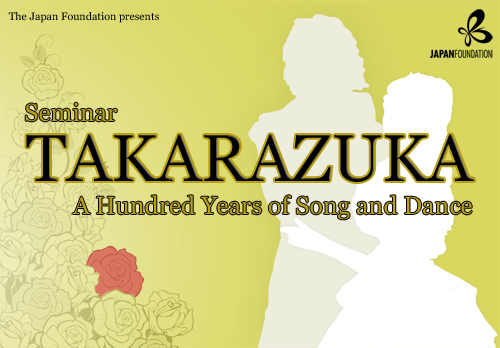


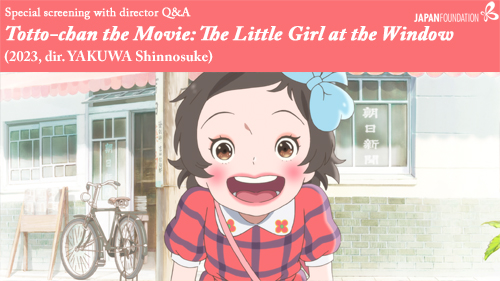




.jpg)
.jpg)

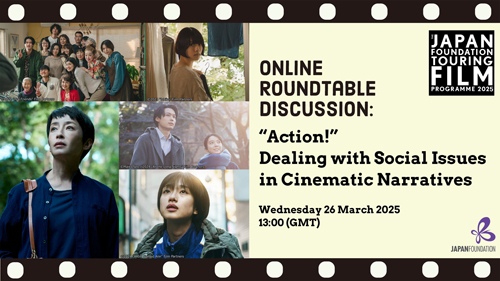
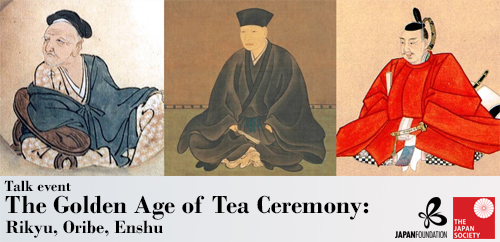



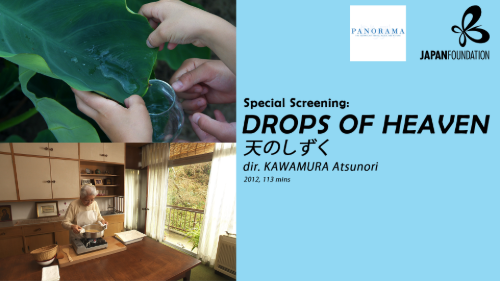

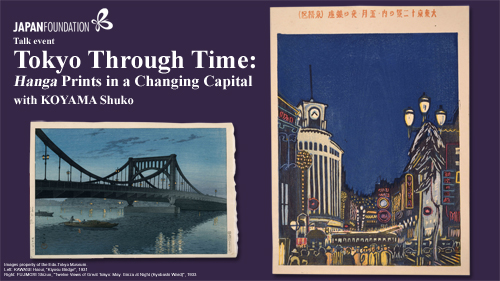
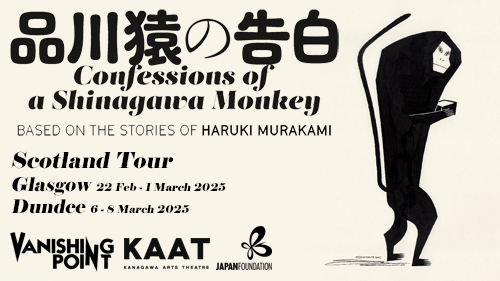
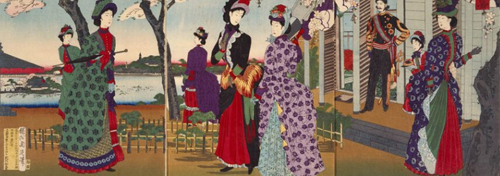
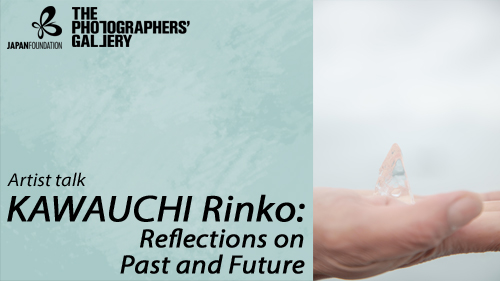
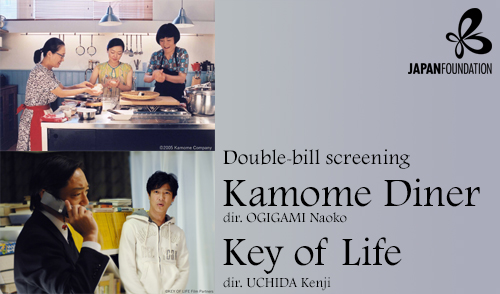


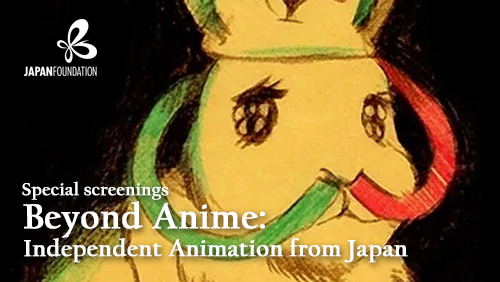
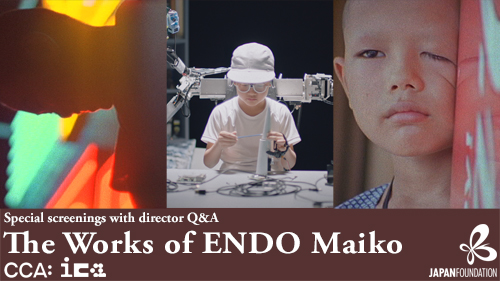


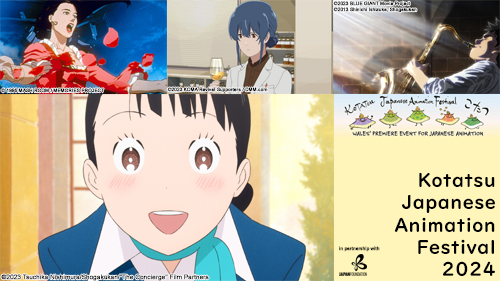
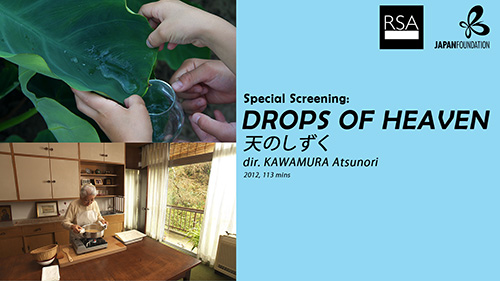
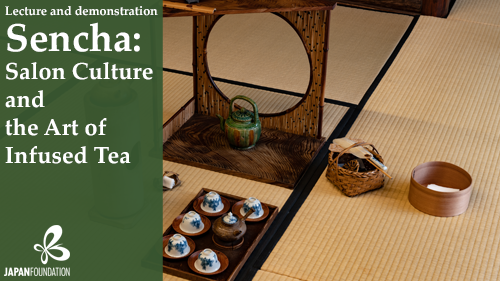
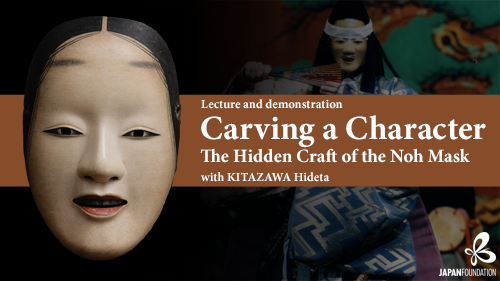

.png)
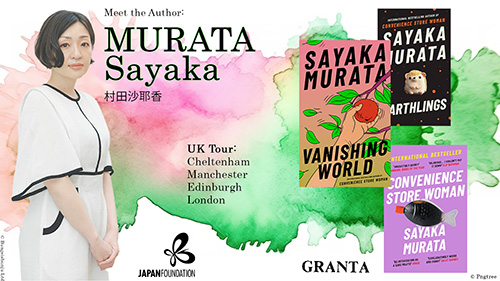
.png)

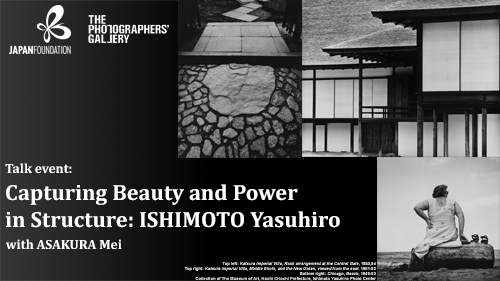
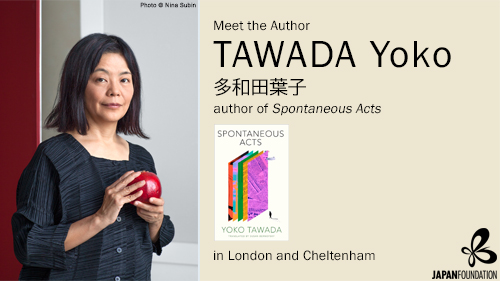

.png)
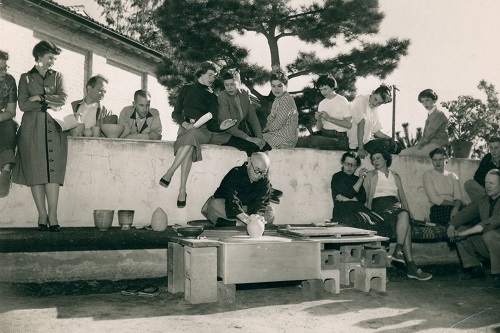





.png)

.png)
 - Copy.png)


.png)


.png)

.png)
.png)

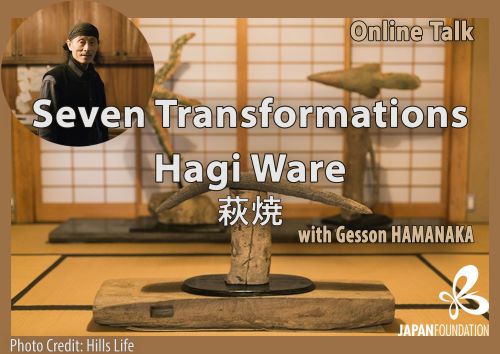


.png) Join us for a special online talk with author TAKAHASHI Hiroki, author of Finger Bone. Be part of an inspiring conversation as he shares his literary journey.
Join us for a special online talk with author TAKAHASHI Hiroki, author of Finger Bone. Be part of an inspiring conversation as he shares his literary journey..png)


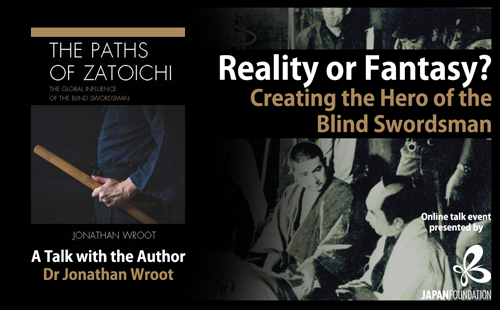
.png)
 The Japan Foundation Touring Film Programme is back in Feb-March 2023! Official line-up is announced here.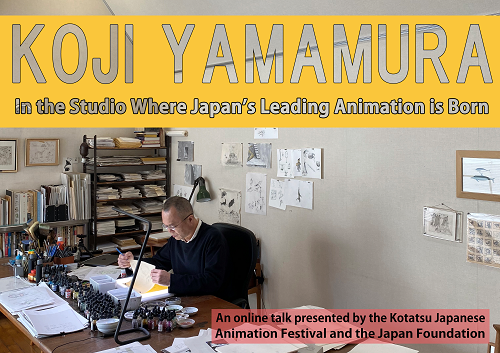


 Download Hideki Noda QA






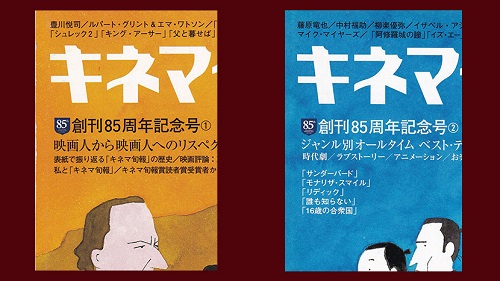



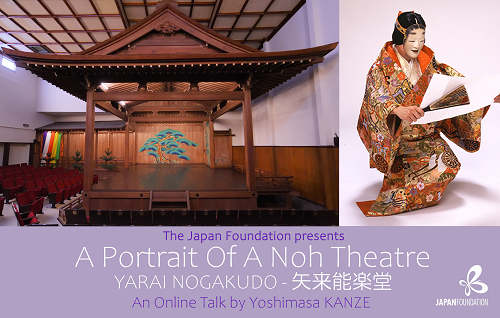





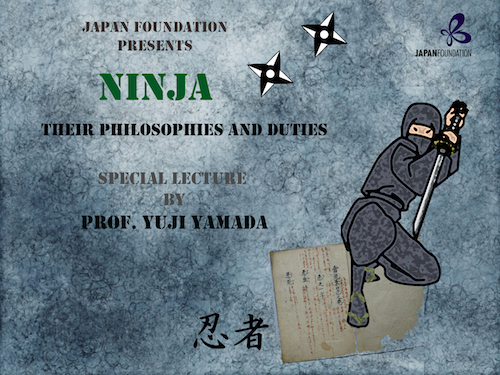







 E-bulletin
 The Japan Foundation, London